Kody · 2025 · B2B2C · Open Banking

Pay by Bank in Pay by Link

Designing Pay by Bank's integration into Kody's Pay by Link channel, designed for a merchant who does not know it saves money and a payer who never thinks to choose it.

This case covers the design work after Pay by Bank moved to the Pay by Link channel. Check Case A to read how I contributed to the strategic pivot.
Case A cover
Case A

Choosing the Right Channel to Grow Pay by Bank
Kody Pay by Bank hero
Kody Pay by Bank overview

Two users defaulted away from Pay by Bank for different reasons. Merchants did not know it cut transaction fees by around 60%. Payers reached for card or Apple Pay out of habit, without considering it.

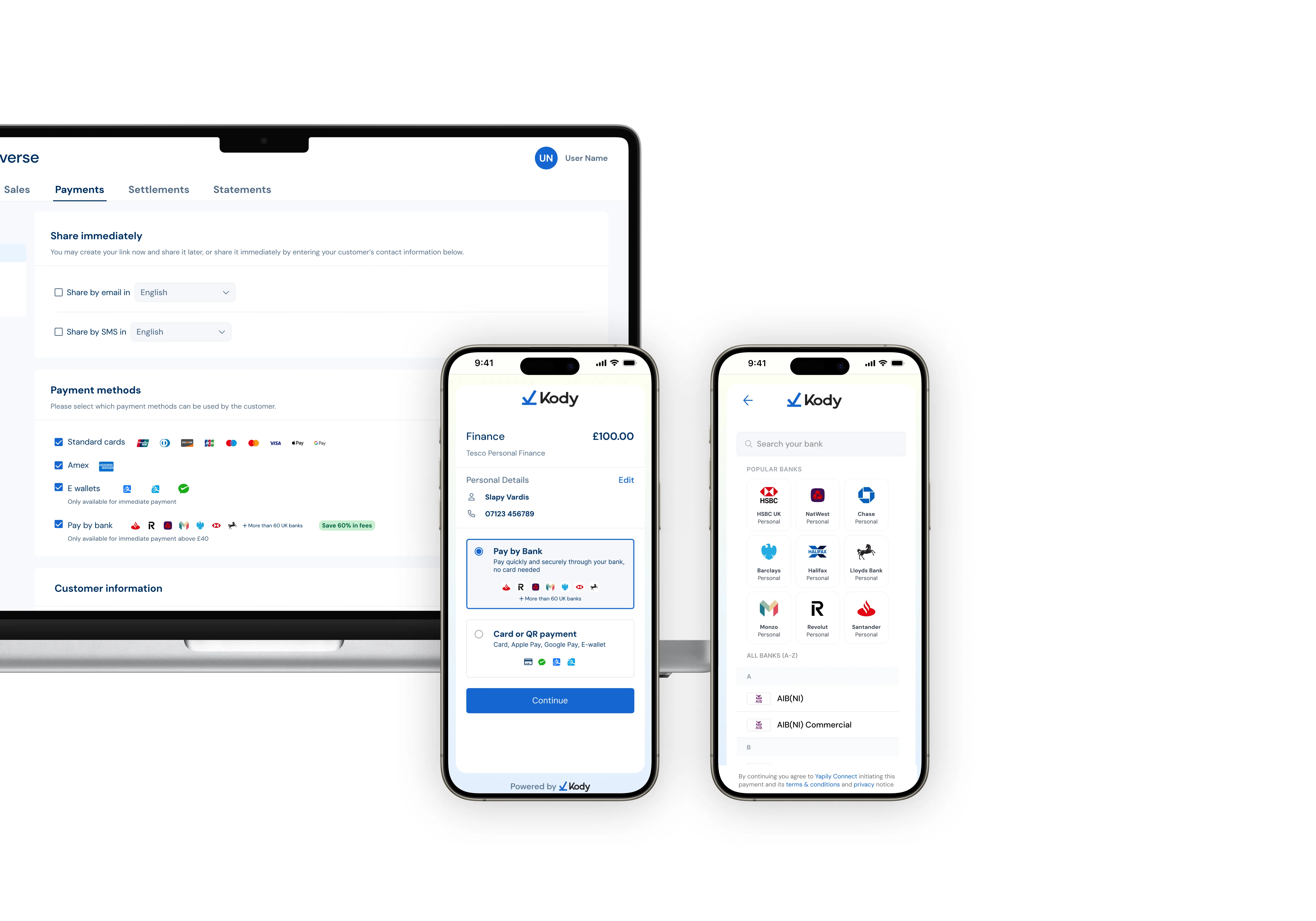
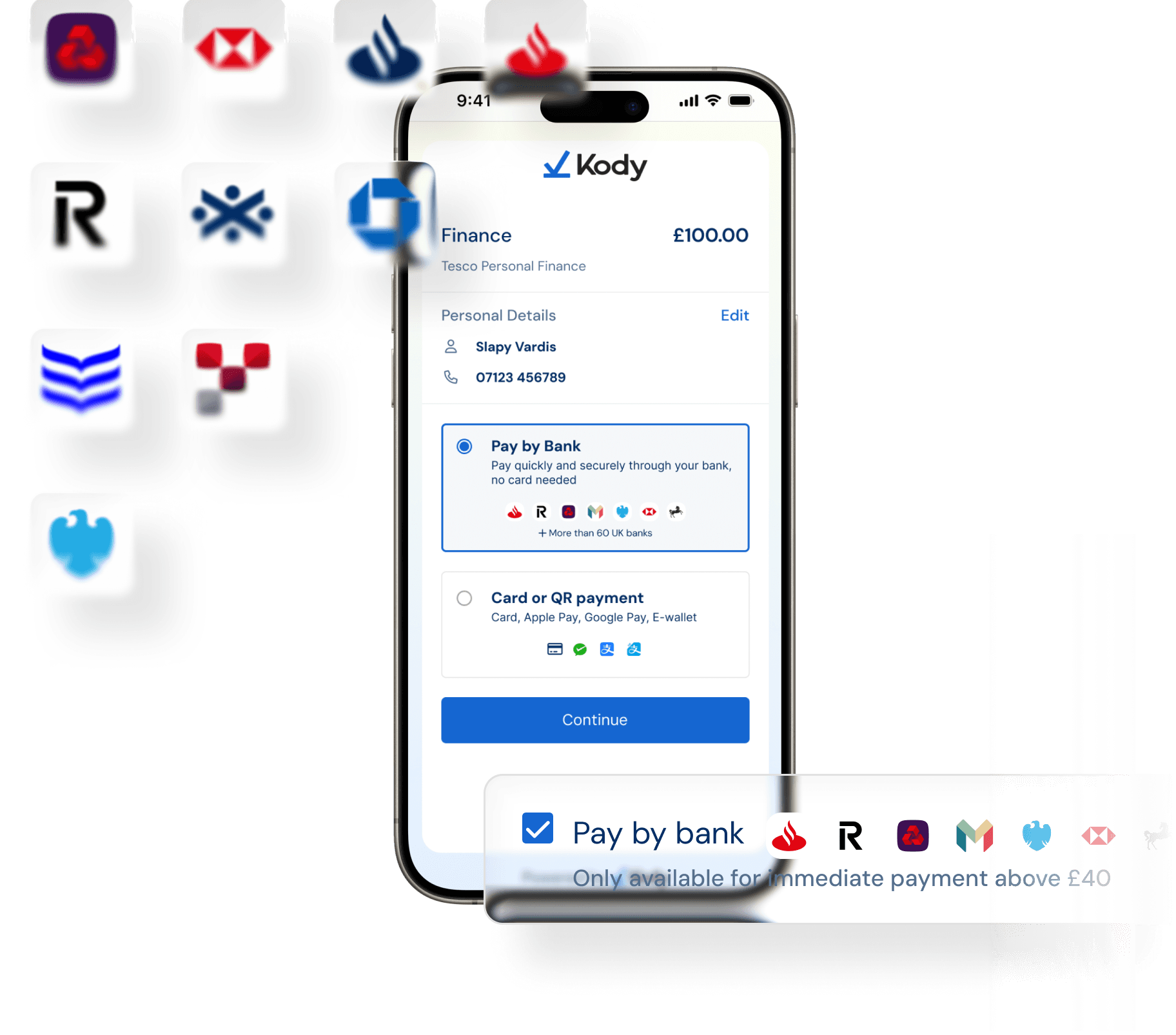
I designed for both: surfacing the fee saving to merchants at the point of link creation, and shaping how Pay by Bank is presented and selected in the payer checkout, including a bank selection flow built around our Open Banking provider's constraints.
Case Study

Pay by Bank in Pay by Link

Background

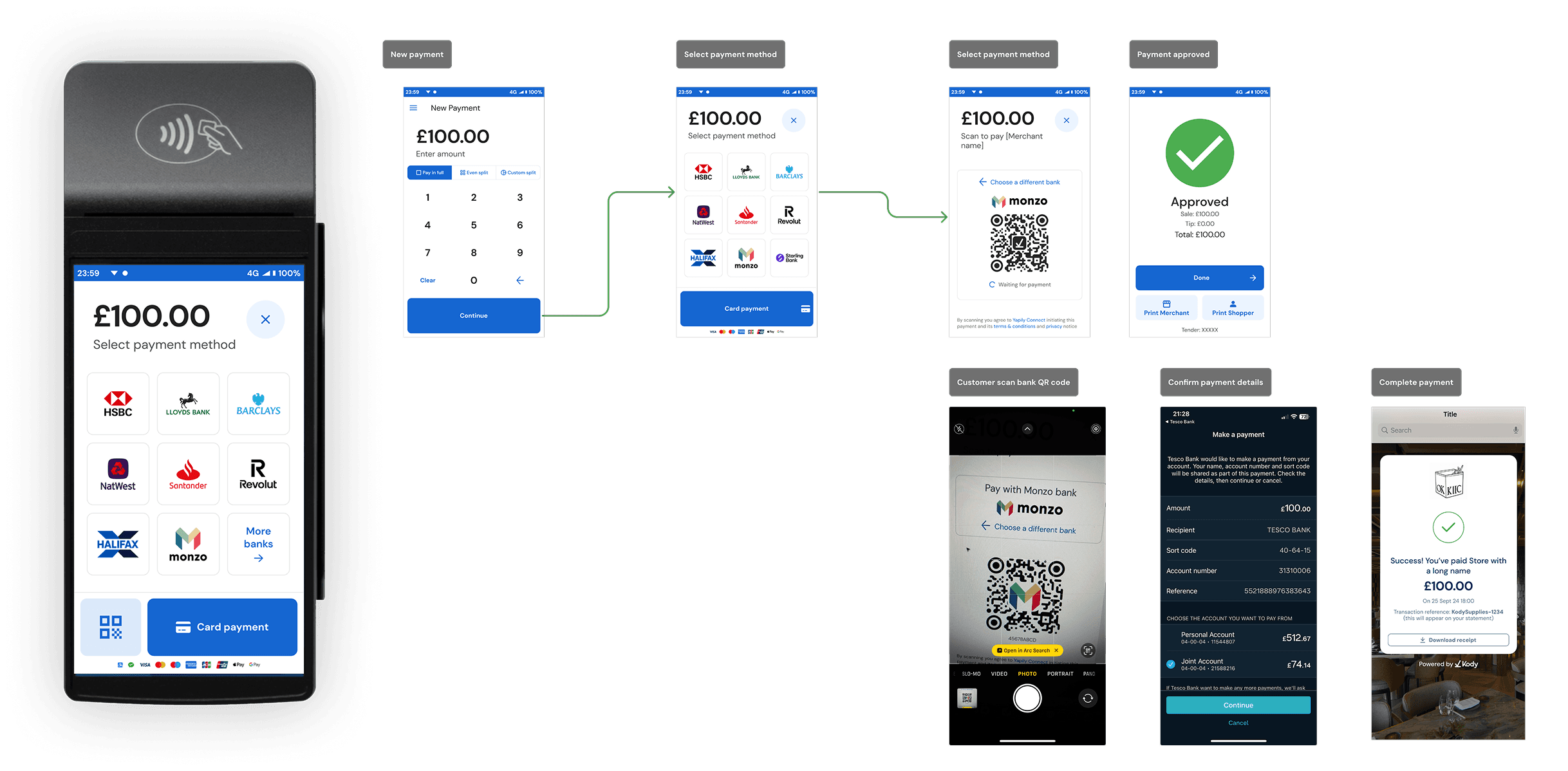
Pay by Bank lets customers pay directly from their bank accounts, without using cards. It is a cost-effective option for both consumers and businesses. Kody first brought this technology into the in-person experience through its terminal product.

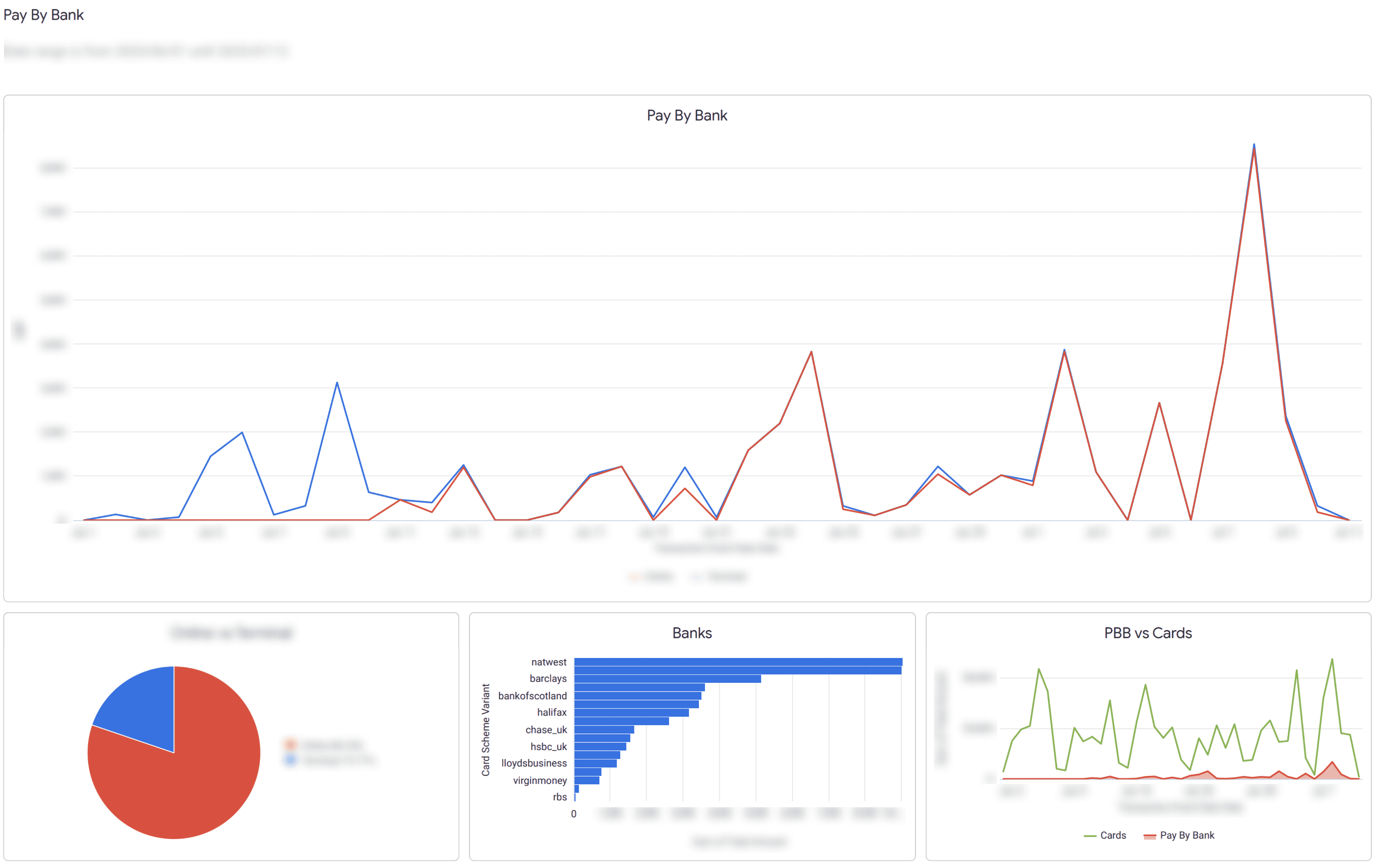
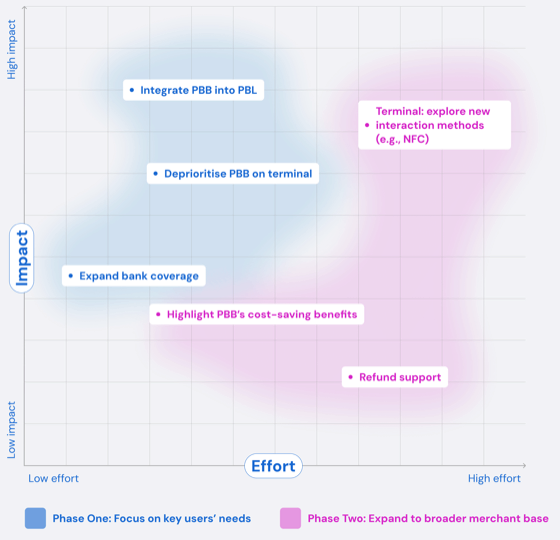
The terminal launch did not get good market feedback. Two months in, it was clear that Pay by Bank did not fit the busy offline checkout environment because it is a context-sensitive payment method. I analysed the problem and identified Pay by Link as a payment channel better matched to PBB's strengths.

First version: Pay by Bank in person experience
P0 ITEM 01

Add Pay by Bank into Pay by Link

Bring PBB into the Pay by Link checkout as a new payment method.

P0 ITEM 02

Expand available banks

Increase supported bank options in Pay by Bank from 9 to 64.

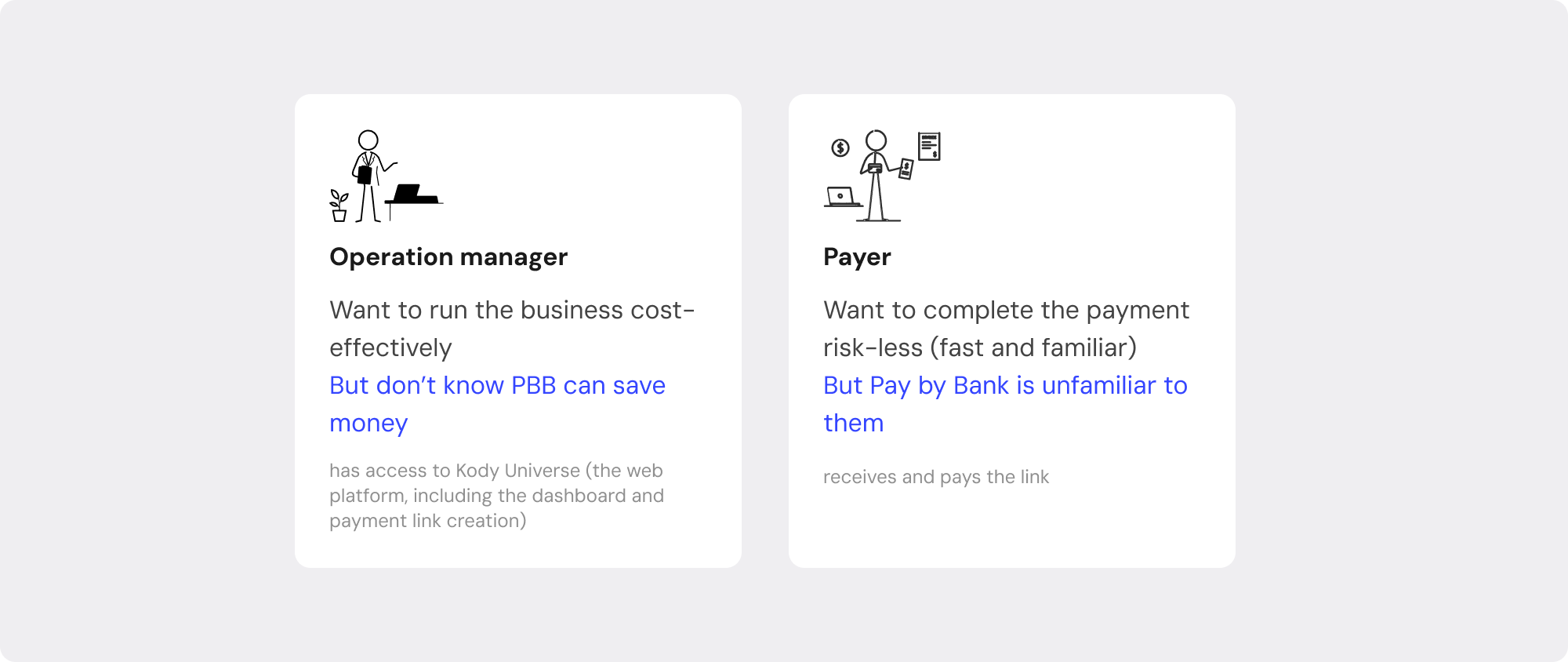
Who is the user?

Link creation is manager-level work, and link payment happens between the payer and their bank.

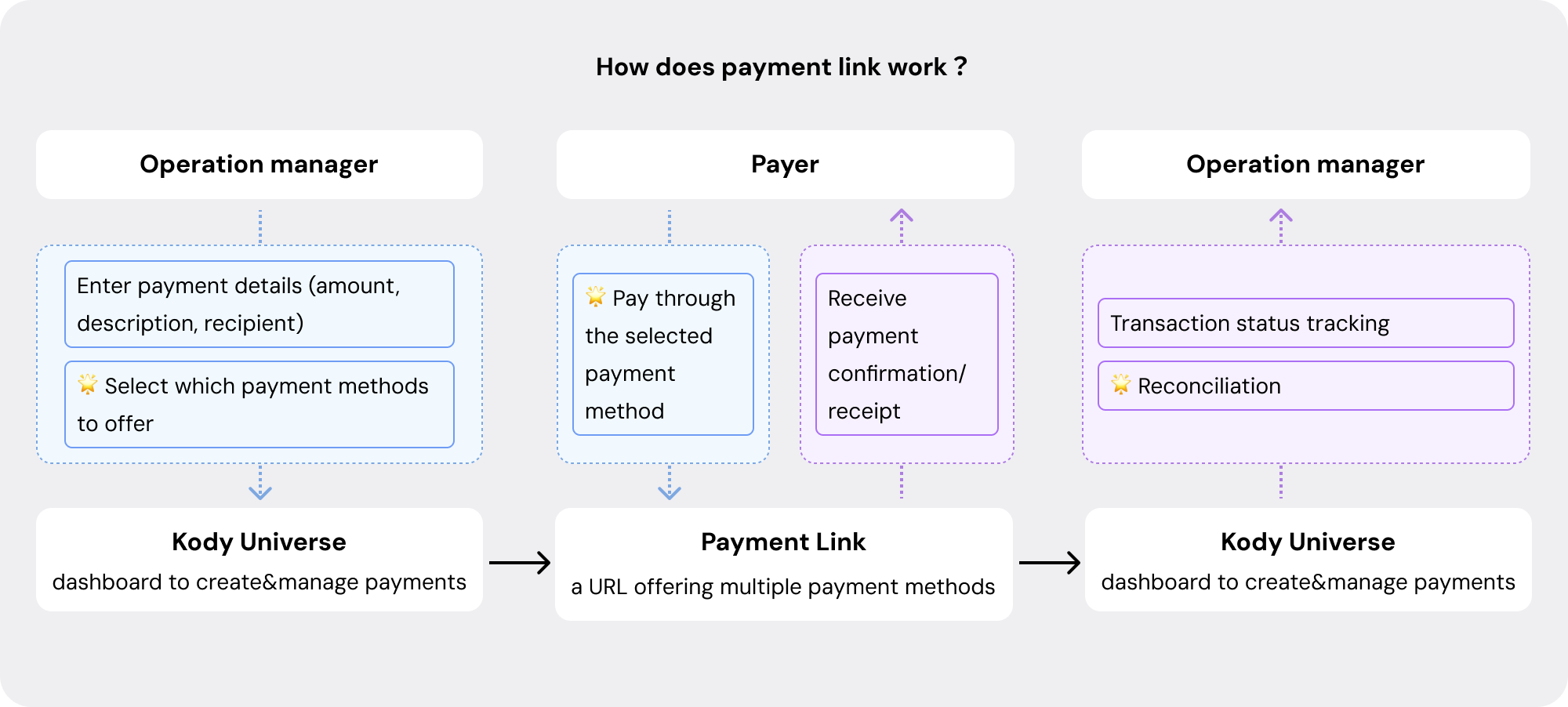
Pay by Link user groupsPayment link flow

Finding and defining the opportunity

Looking again at the interviews through the lens of Pay by Link surfaced four themes. I separated them with one question: which can design actually move?

  • Merchants don't know Pay by Bank saves them money. The launch communication reached business owners, not the operation managers who actually create links.
  • Payers default to card or Apple Pay. Familiar methods win when there is no reason to consider an alternative.
  • The £40 minimum. Merchants don't want it and don't fully understand it.
  • No chargeback. Unlike cards, Pay by Bank can't be reversed, which creates a potential trust concern for payers.

Design can solve it

Design cannot remove it

Merchant fee awareness

Payer default to card or Apple Pay

Opportunities

Designed for

£40 minimum

No chargeback

Constraints

Designed around

The first two are awareness and behaviour problems. Design can shift them, so they became my two opportunities.

The £40 minimum and the lack of chargeback are product and policy constraints. Design can't remove them at this stage.
Opportunity 1

Merchant fee saving awareness

Pay by Bank can save merchants around 60% in transaction fees by removing interchange fees and card scheme fees. Most merchants did not realise this.

Part of the reason was organisational. Manager levels differ across companies, and the first launch communication often reached only the business owner, not the payment link operators or managers who create links day to day.

"I have no idea it can actually save money, and no one told me about this. If you told me, I would let my employee prompt this payment method, of course."

Manager of a London restaurant

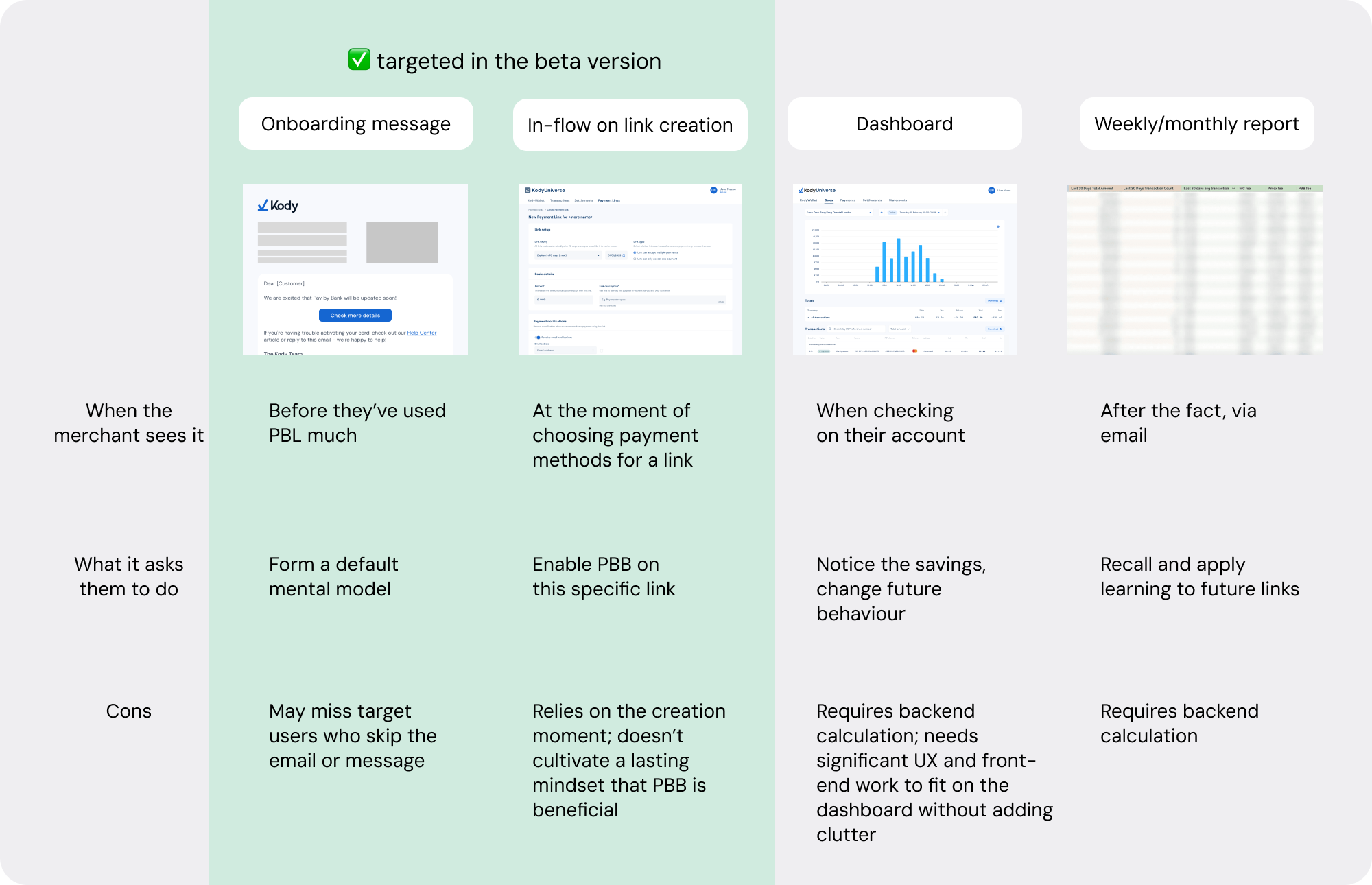
Rather than putting all the effort into marketing, the opportunity was to make the saving visible at a moment when the merchant could act on it.

Four candidate places to surface Pay by Bank savings
Beta decision

Approximate saving at link creation

To save front-end resource and backend calculation work, I chose to surface an approximate saving percentage at the point of link creation. It informed the merchant without requiring a full savings calculation system.

Reach the actual operators

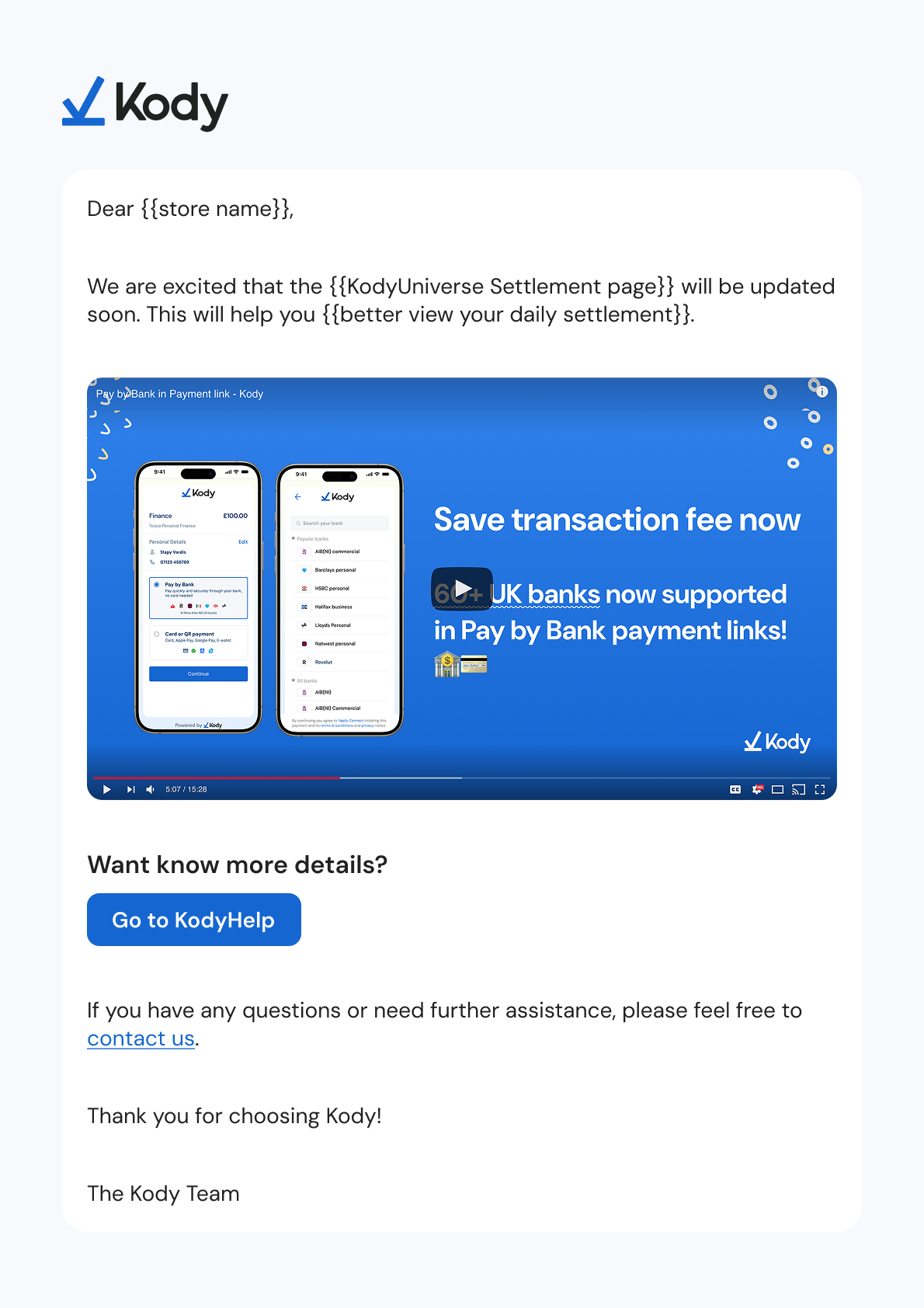
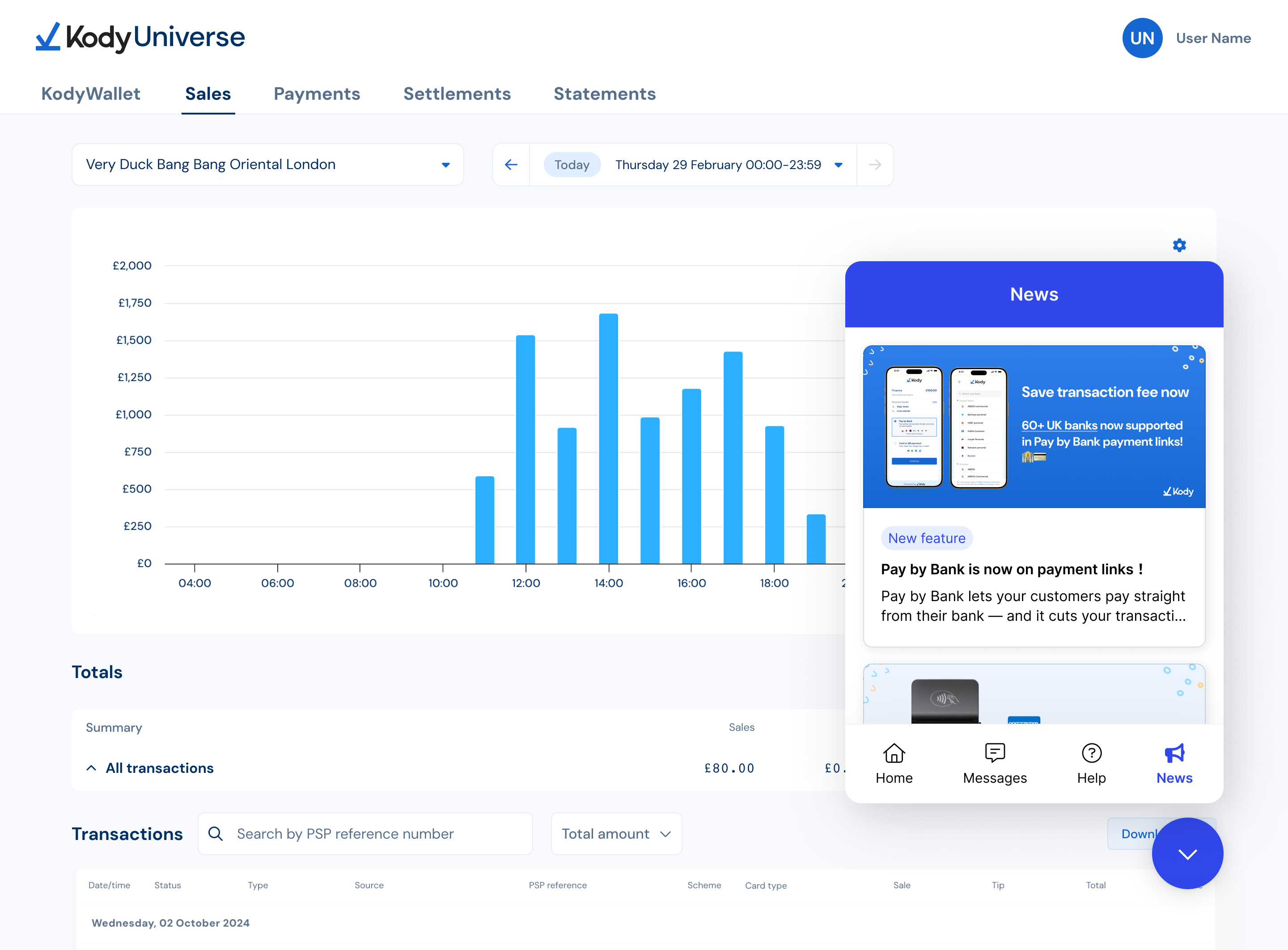
I proposed and helped build the launch email template and Intercom message so managers creating payment links in Kody Universe would receive the launch message in the right place.

Opportunity 2

Earning the payer's choice, then their trust

The opportunity was to design the two moments that decide whether a payer chooses Pay by Bank and completes it: the moment of choice on the landing screen, and the moment of finding their bank.

Moment 1: The landing screen

A Pay by Link page offers multiple payment methods. Payers follow muscle memory and reach for card or a digital wallet. UK consumer familiarity with the term "Pay by Bank" was cited as 38%, so unfamiliar wording pushed people back to methods they recognised.

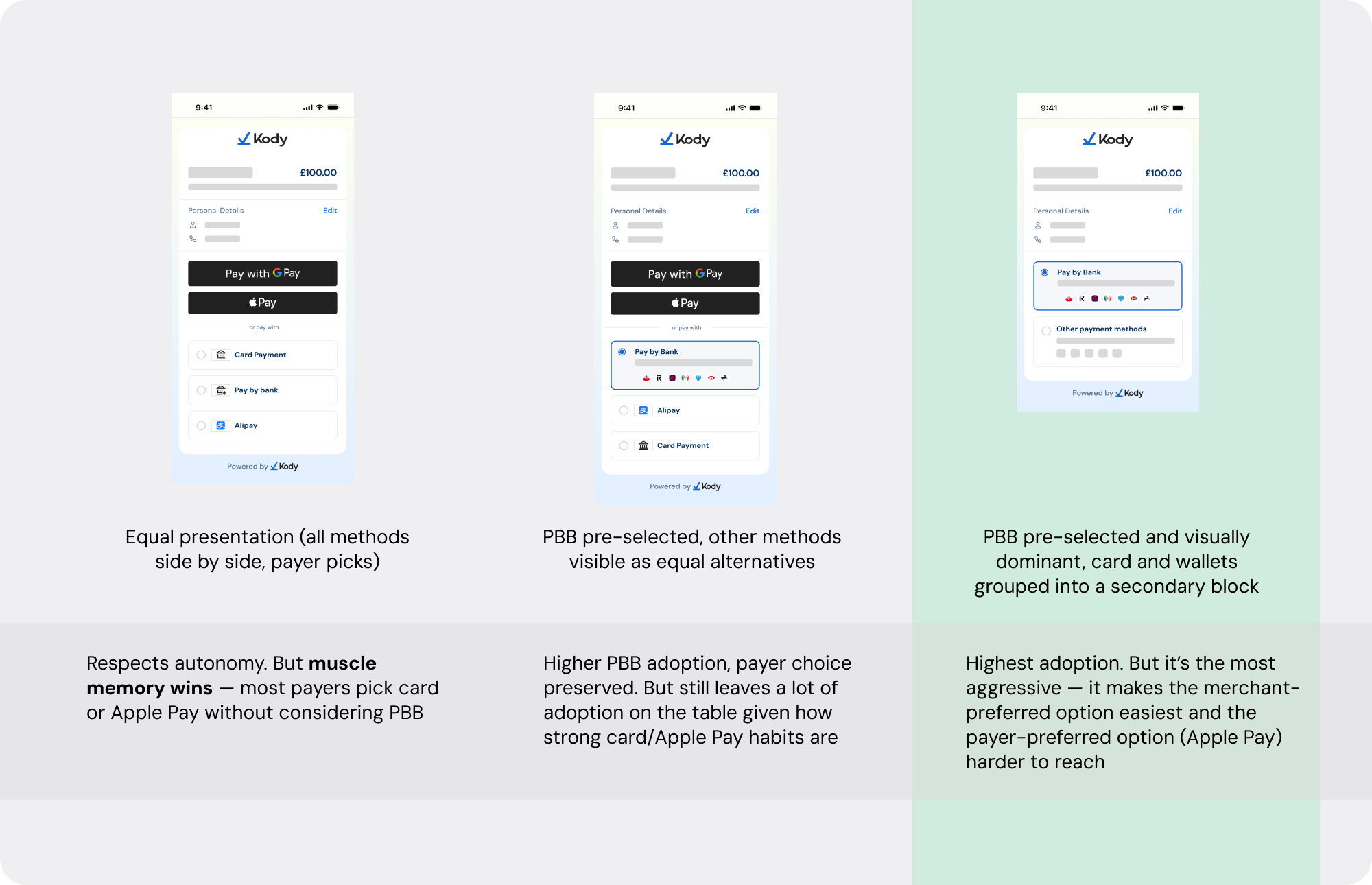
I could not change Apple Pay and Google Pay buttons because they render as components defined by the platform. What I could control was how much visual weight the Pay by Bank block carried.

Three landing screen presentation options
Decision

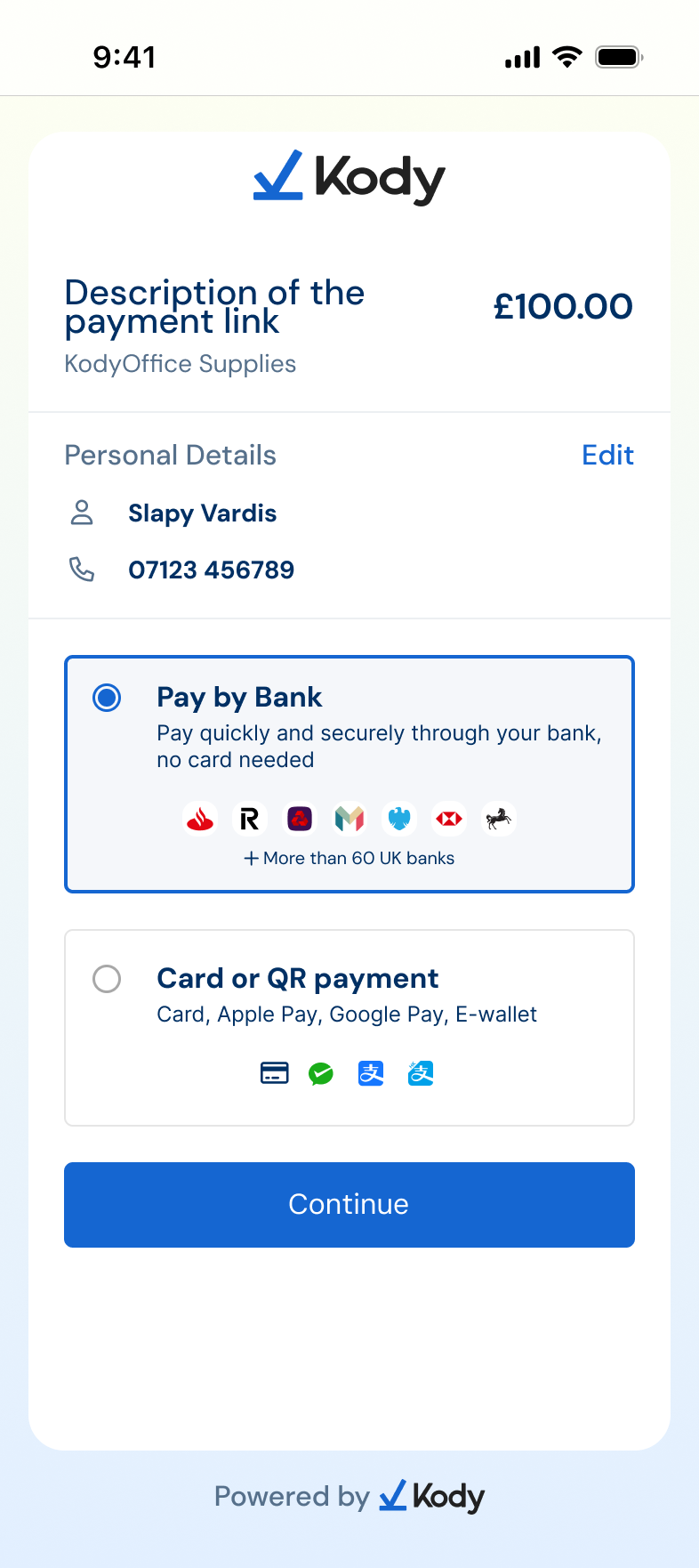
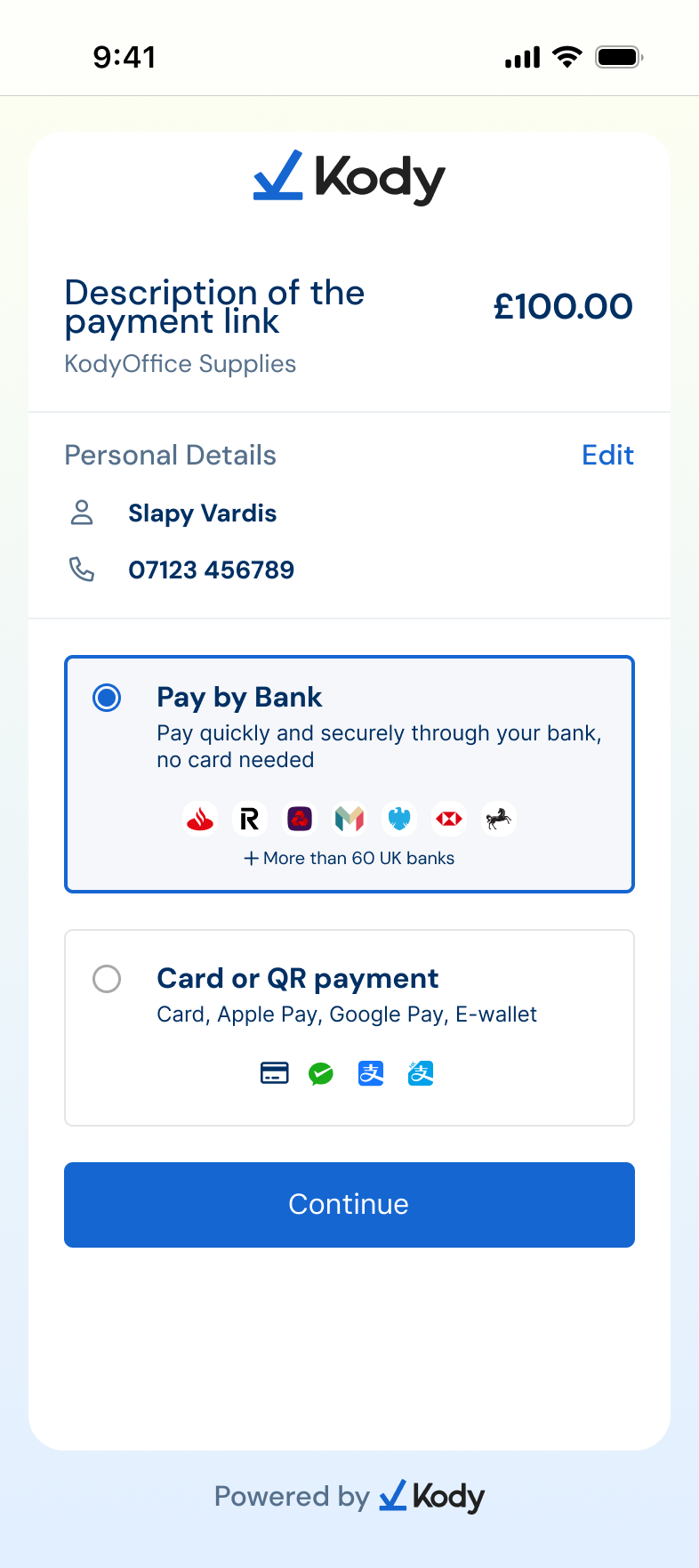
I chose the third approach: Pay by Bank selected by default and visually dominant, with card, Apple Pay, Google Pay, and digital wallets grouped into a secondary "Card or QR payment" block. For a beta that needed to prove the channel, a presentation with equal visual weight would likely have left Pay by Bank rarely chosen.

Moment 2: Choosing a bank

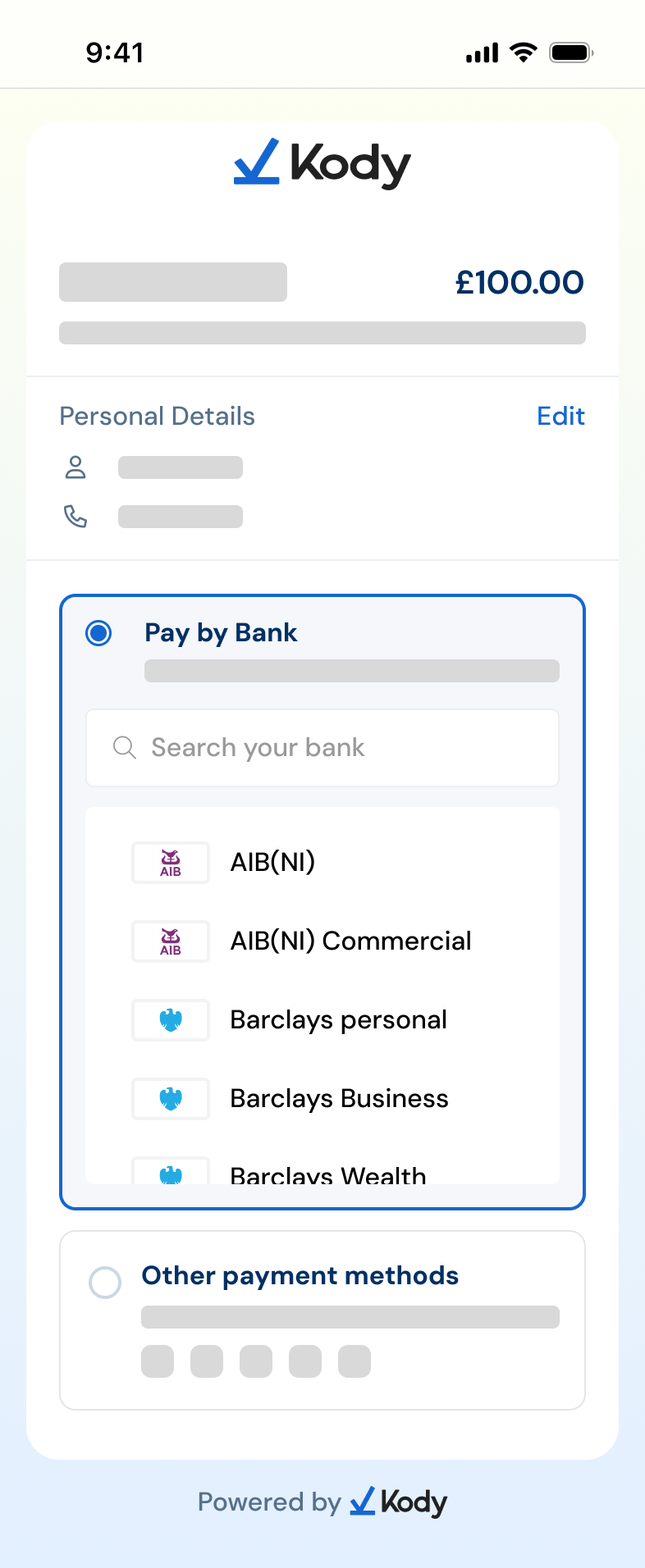
Before designing the bank list, one decision came first: should bank selection be its own screen? I prototyped three simple approaches to feel the difference in flow.

Approach 01

Bank list inside the Pay by Bank card

Fewest steps. But it flattens two decisions of very different weight — choosing a method and searching across more than 60 banks — onto one screen, competing for attention.

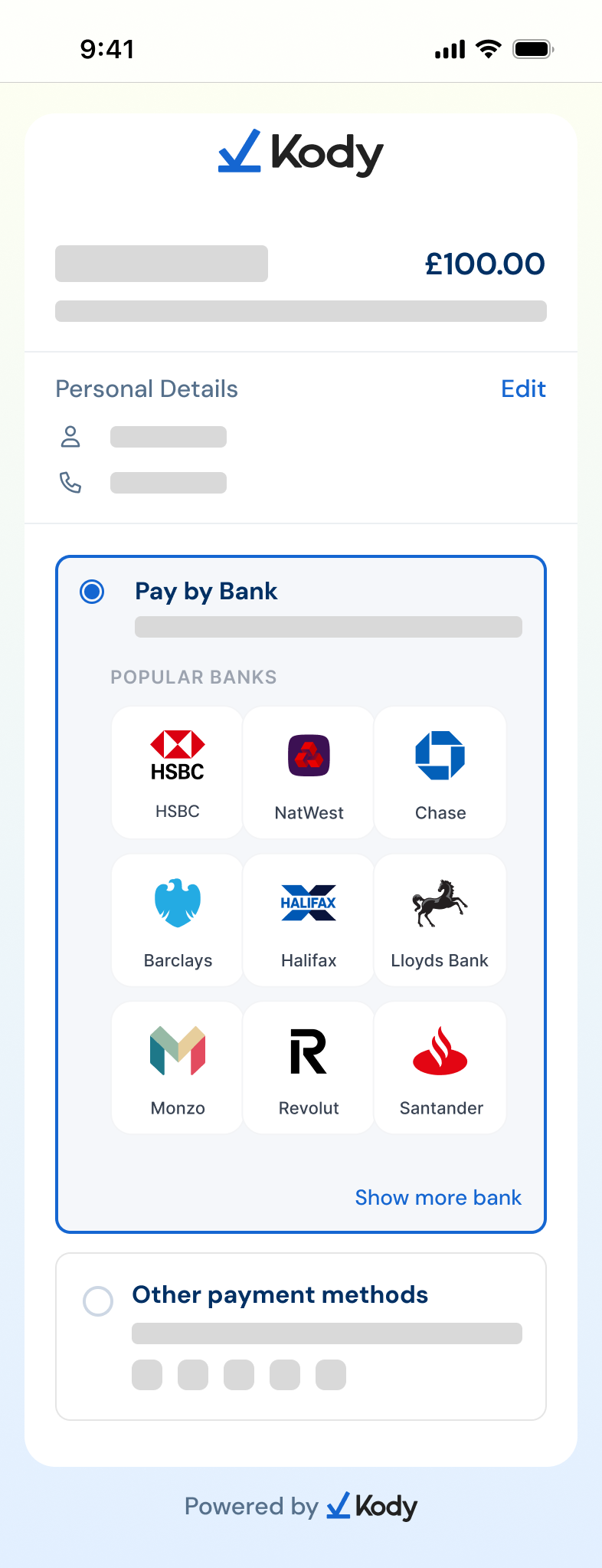
Approach 02

Popular banks on the first screen, rest on a second screen

Fast for common banks. But it splits bank selection across two screens, and the variant step still has to land somewhere.

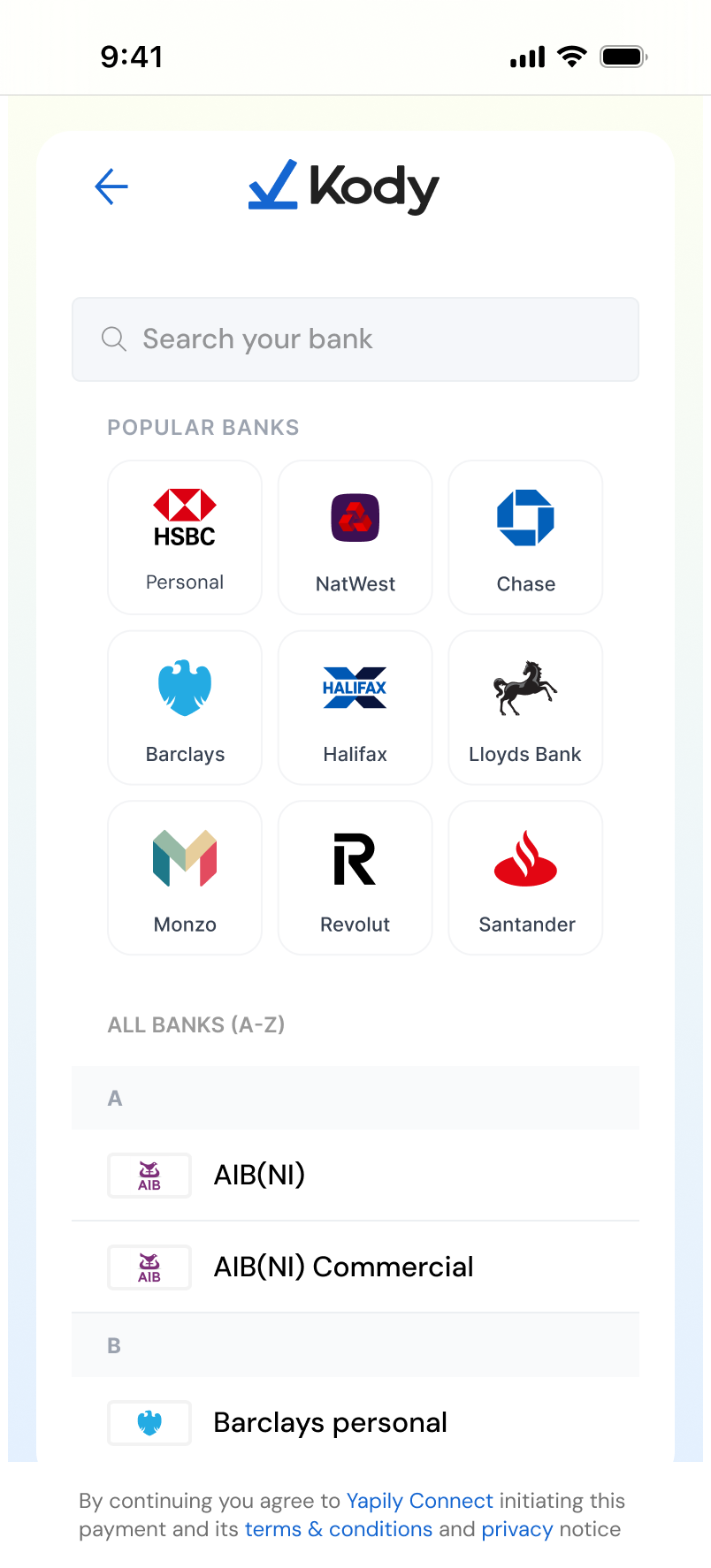
Approach 03Selected

Bank selection as its own dedicated screen

One more step. But each screen asks for one kind of decision: pick a method, then pick a bank.

Decision

I chose the dedicated screen. Choosing a method and searching across more than 60 banks are different kinds of task; giving each its own screen keeps one from crowding the other.

Provider constraint

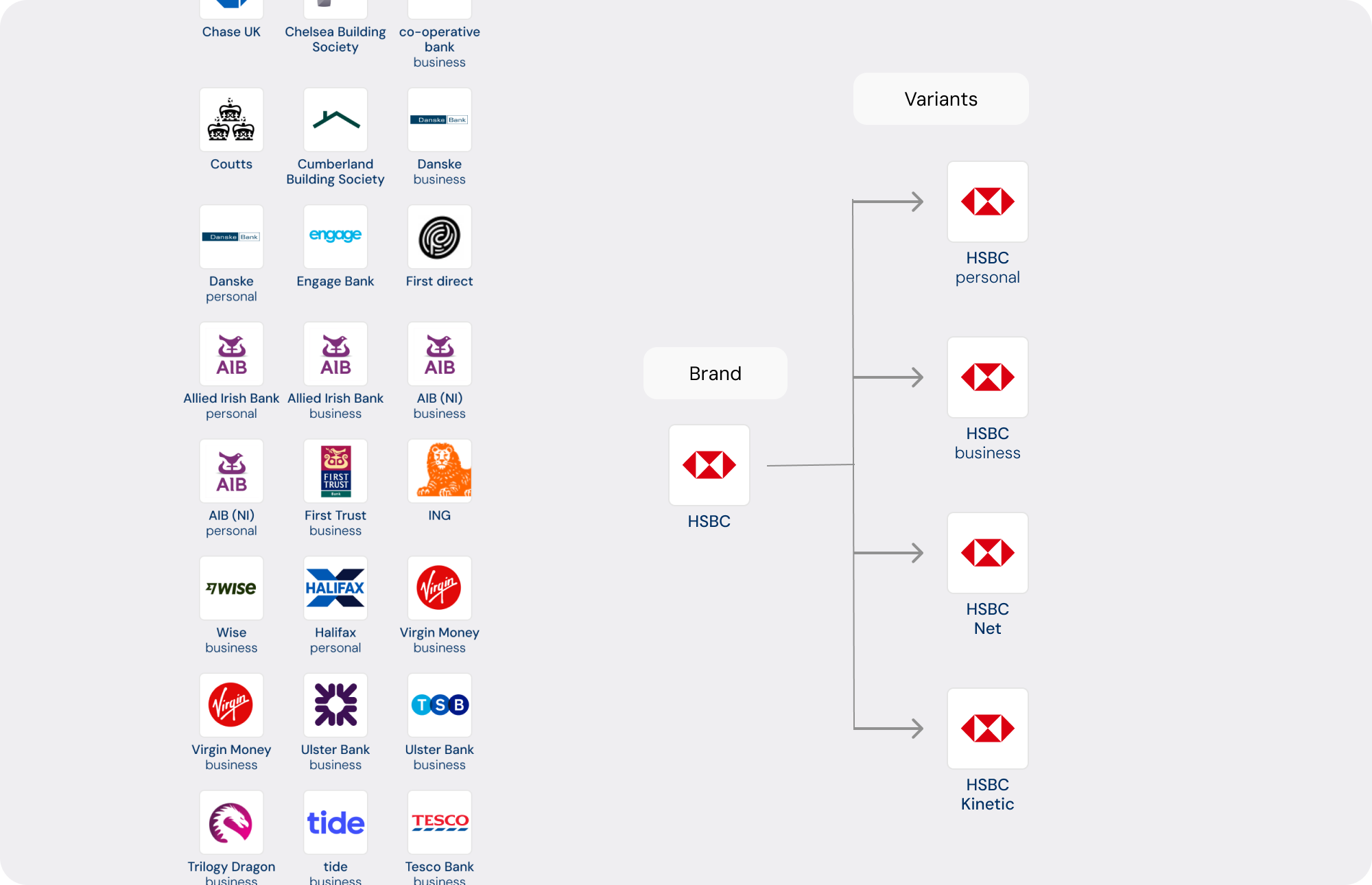
Yapily returns a flat variant list

"Monzo Personal" and "Monzo Business" are separate entries. Collapsing them into one entry per brand would need a maintained mapping and ongoing upkeep that the beta timeline did not allow.

Yapily raw bank variant list

Designing the list

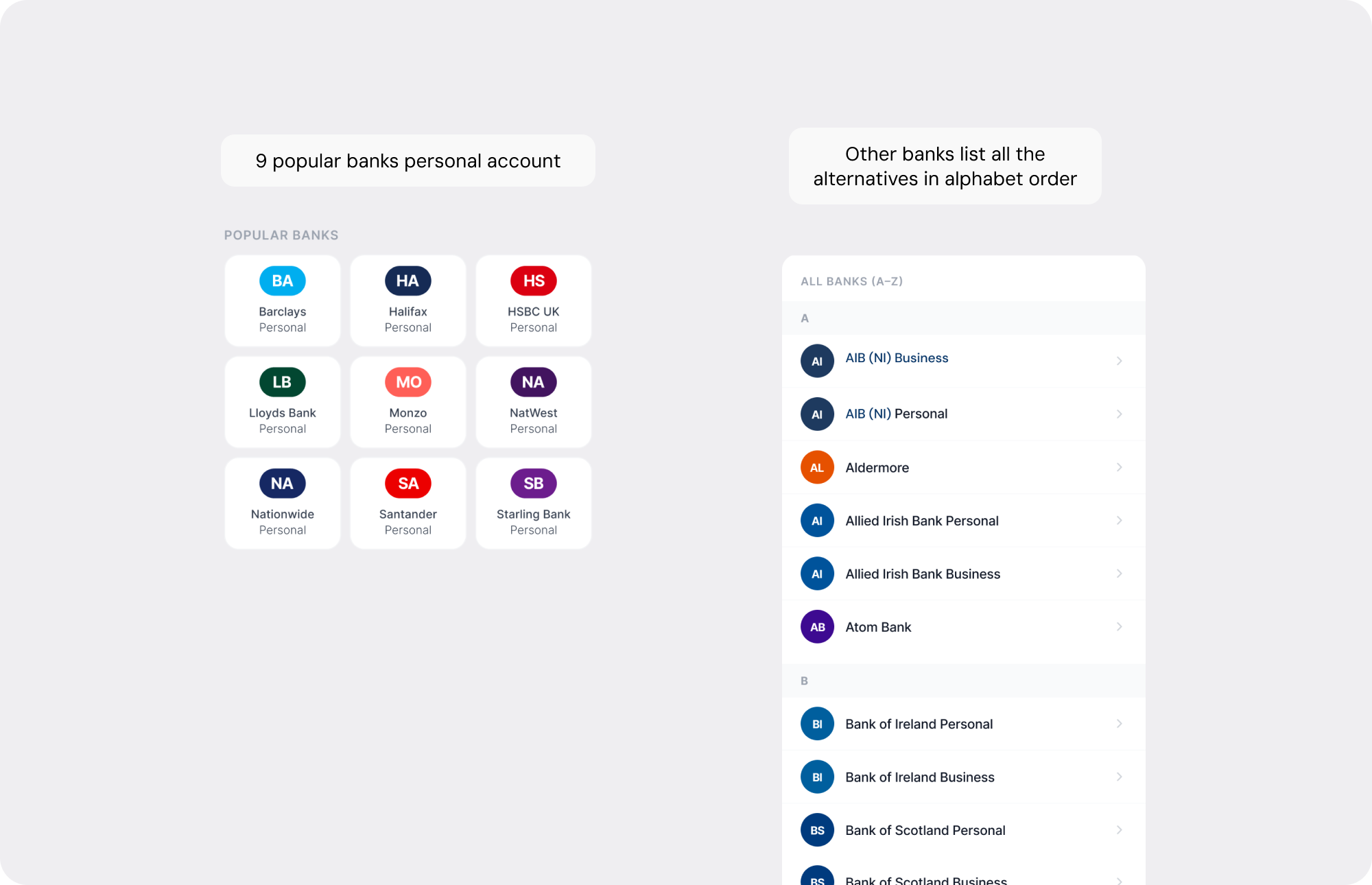
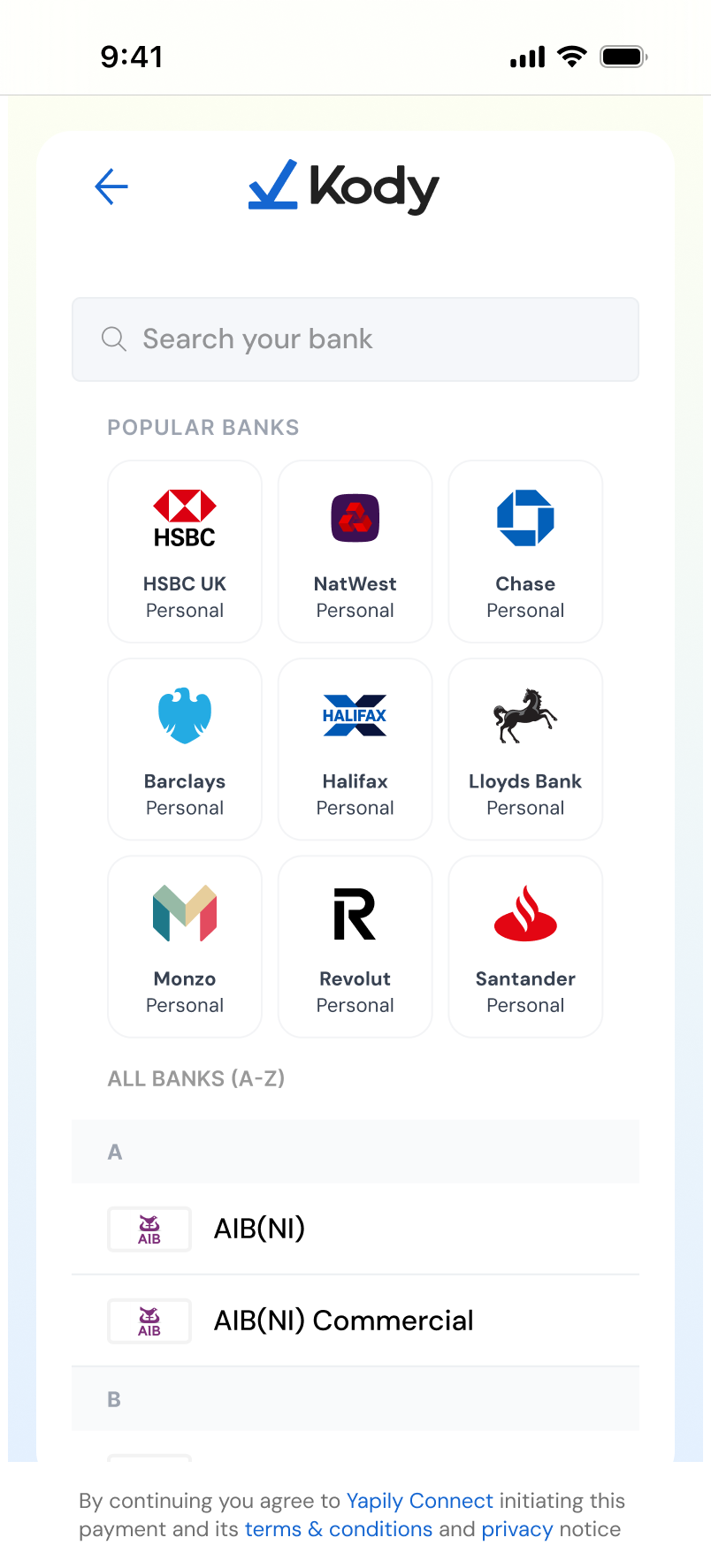
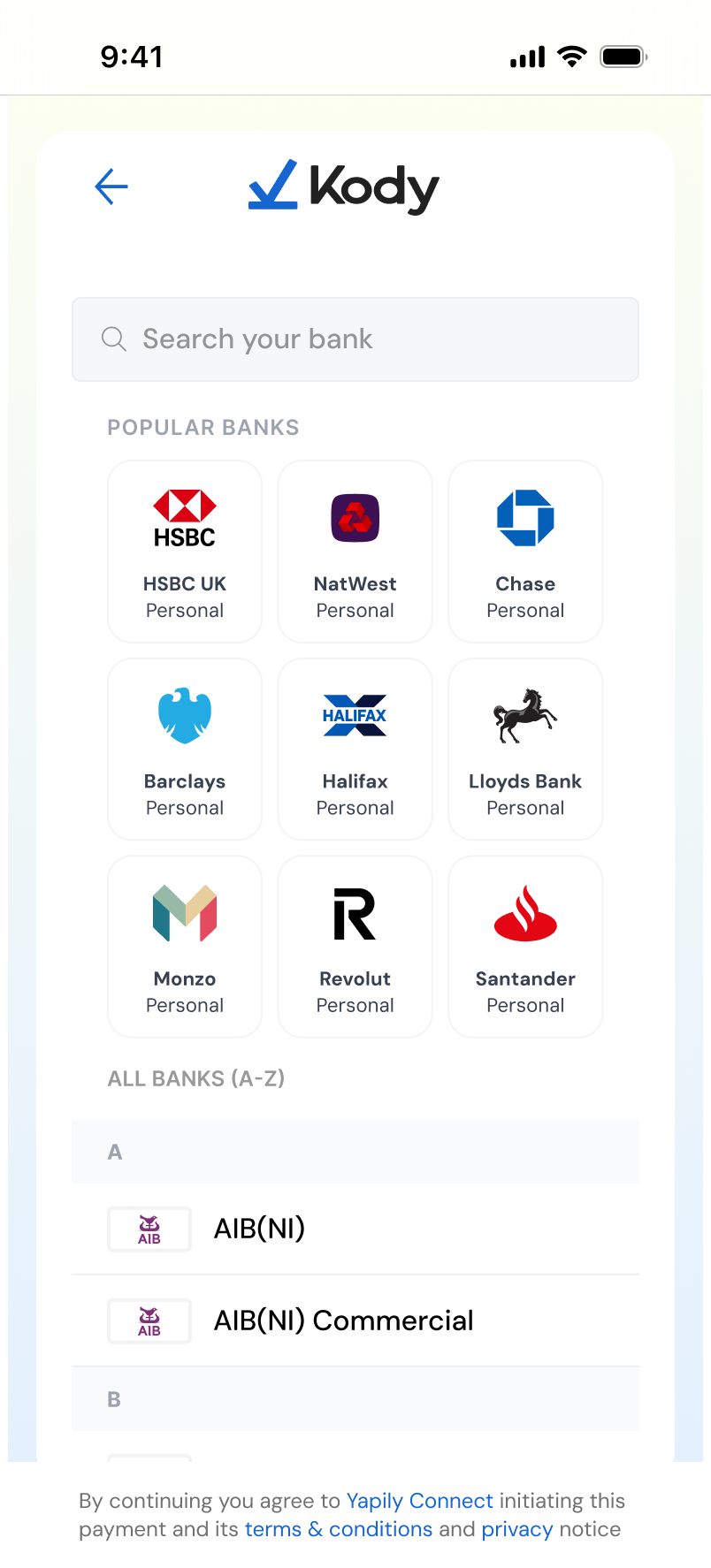
I used the variant list directly: no aggregation and nothing to maintain. To make it usable, the 9 most used personal account variants were pinned to the top, with the rest in an alphabetical list below. Every row behaved the same way: tap a variant, it is selected.

Kody's transaction data showed 87% of Pay by Link payments came from merchant categories where payers are overwhelmingly individuals, so personal account variants were the pragmatic first priority.

Pinned popular banks and alphabetical list

Designing for the wrong choice

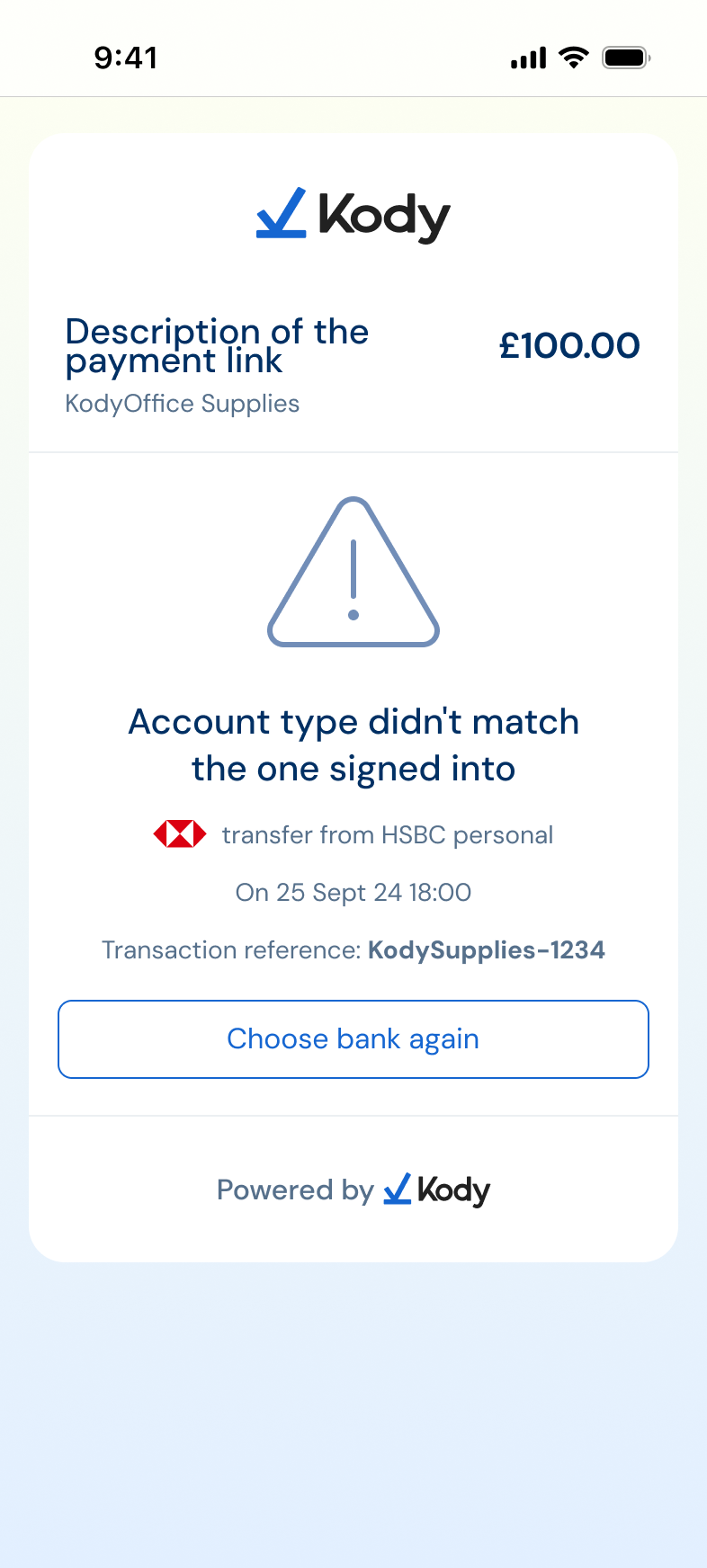
The flat list made one failure predictable: a payer choosing the wrong variant, such as personal instead of business. The cost of that is not one lost payment; it is a payer who walks away believing Pay by Bank does not work.

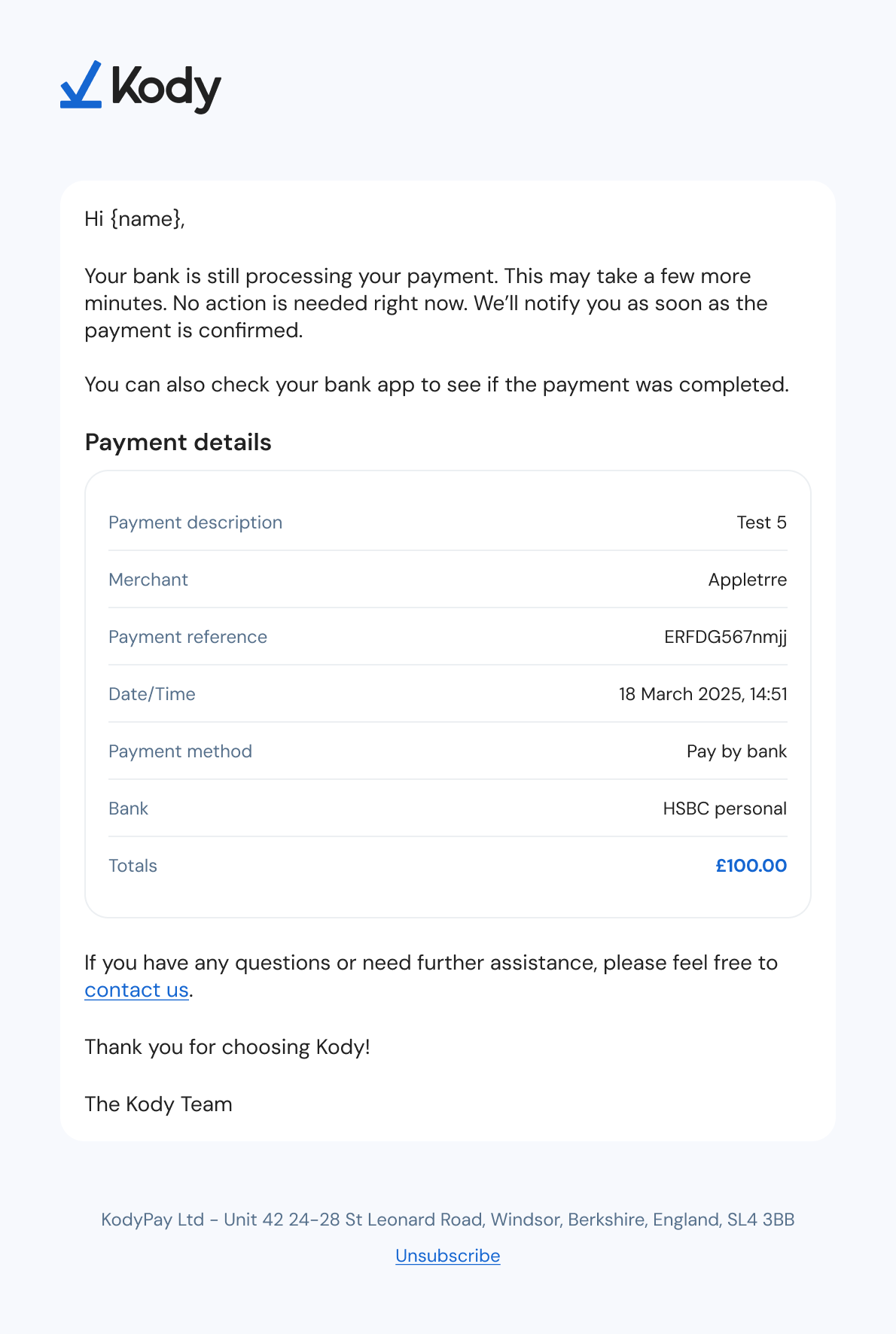
The error copy names a neutral mismatch and routes them straight back to the bank picker with Pay by Bank still selected. For payers who had already left, email and SMS bring them back to the same link, framed as finishing an open payment rather than retrying a failed one.

Original error EOP

PBB Error EOP

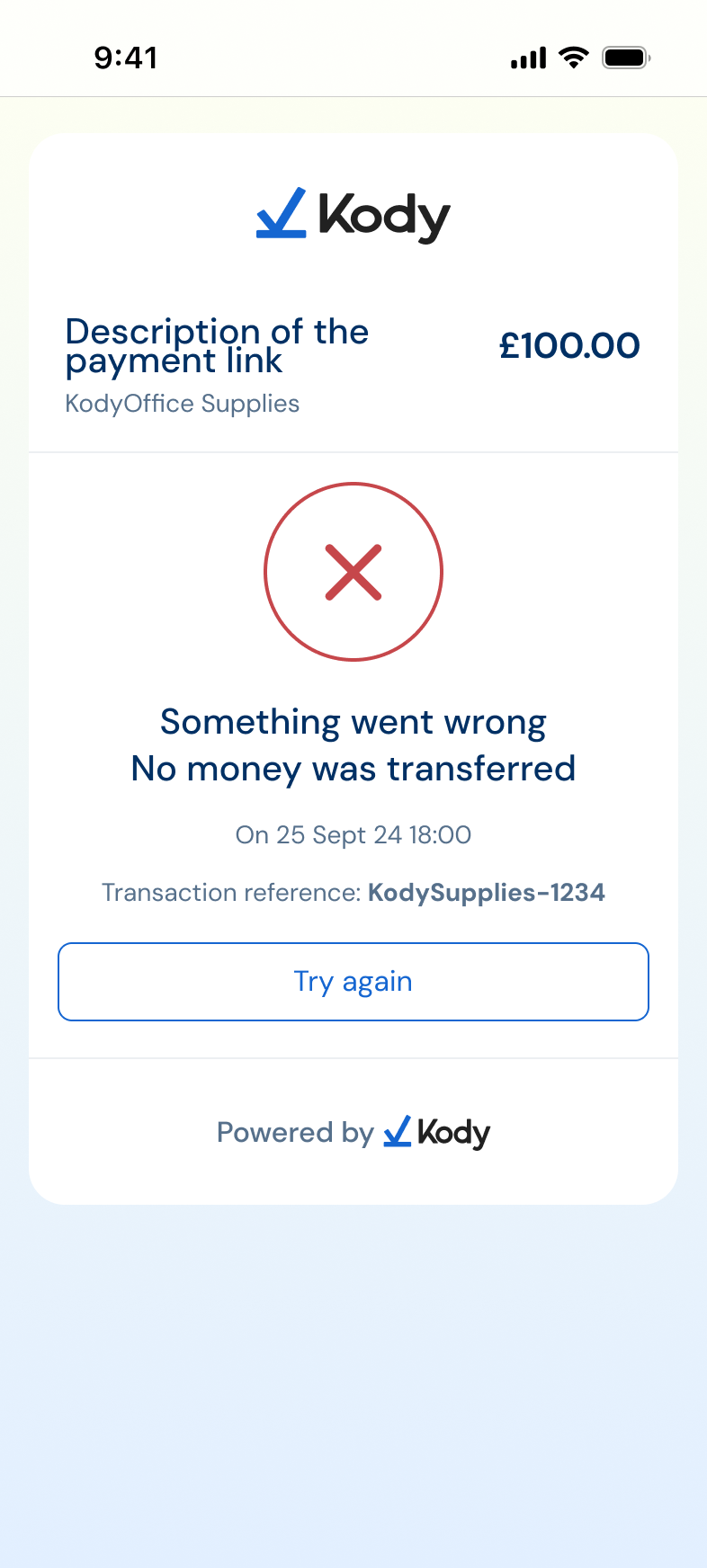
All error scenarios led to this general error page

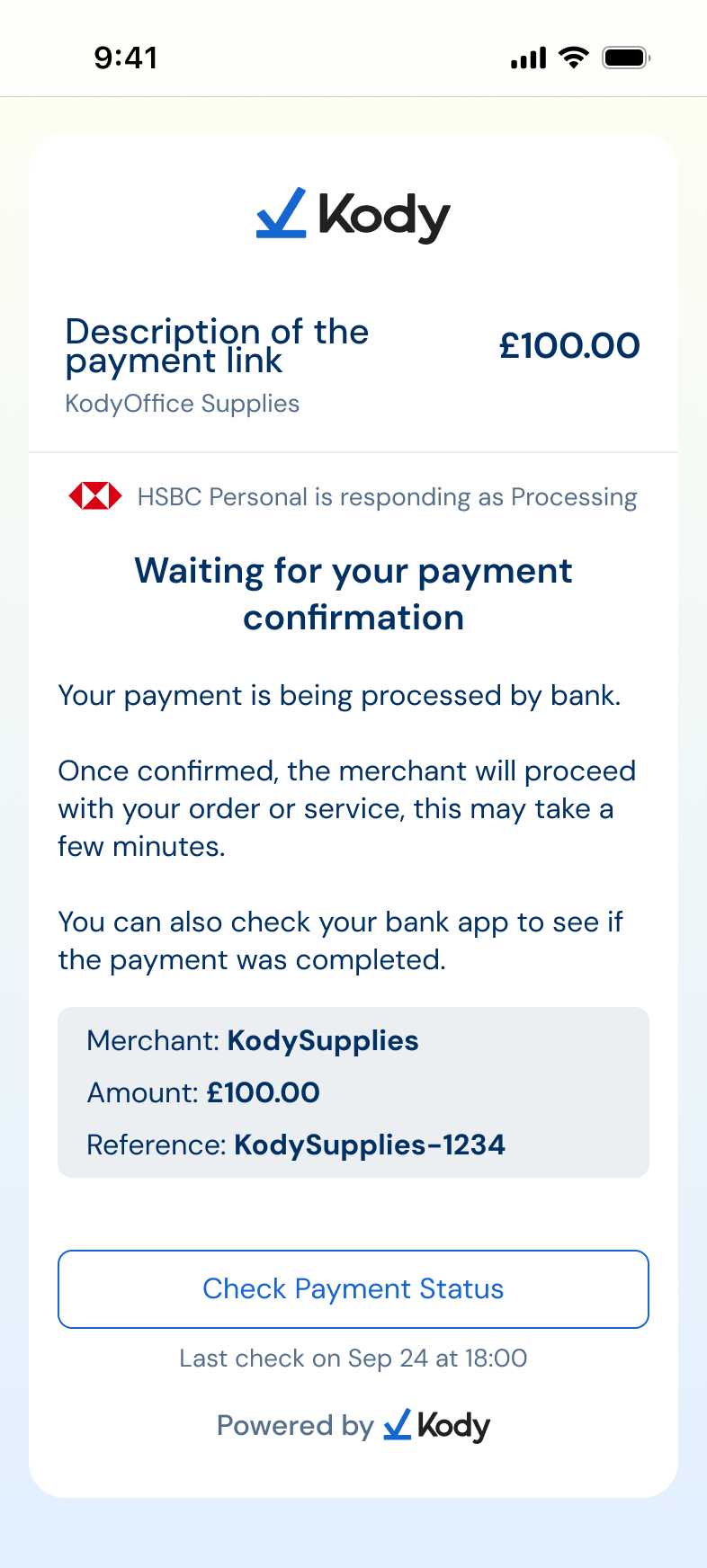
Instead of a single generic error page that gave users no useful information, I worked with engineering to identify two scenarios that happen most often — and designed for each separately

Original error end-of-payment screenPBB error: time lag pending screenPBB error: wrong account type screen

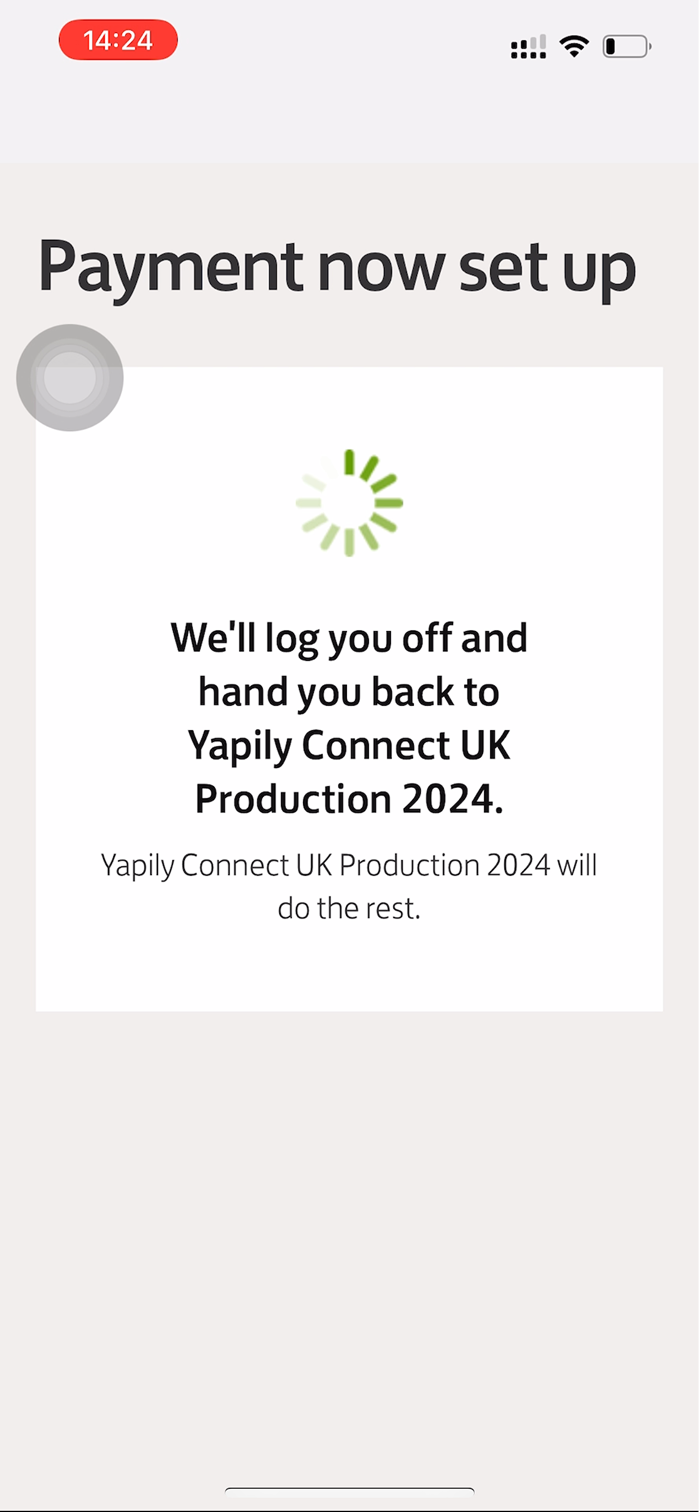
Time lag between the API and the bank's response

Authorisation with wrong account type

Failsafe Email

Kody

Hi James,

Your previous payment attempt was still open.

http://erikodkkbody.com

This can happen if the selected bank account could not be verified, or if the account balance changed before the process was completed.

What should I do?

1

Confirm your selected bank account status

2

Continue with payment using the selected bank

3

After payment is complete, please return to [store name] and make sure you see the payment success page.

Ready to pay?

If you have any questions or need further assistance, please feel free to contact us.

Thank you for choosing Kody!

The Kody Team

KodyPay Ltd - Unit 42 24-28 St Leonard Road, Windsor, Berkshire, England, SL4 3BB

Unsubscribe

Copy & framing

Using less tense copy — 'your payment is still open' — to make clear this is not the payer's fault or a Pay by Bank failure

Rapid prototype with AI help, kept realistic for implementation

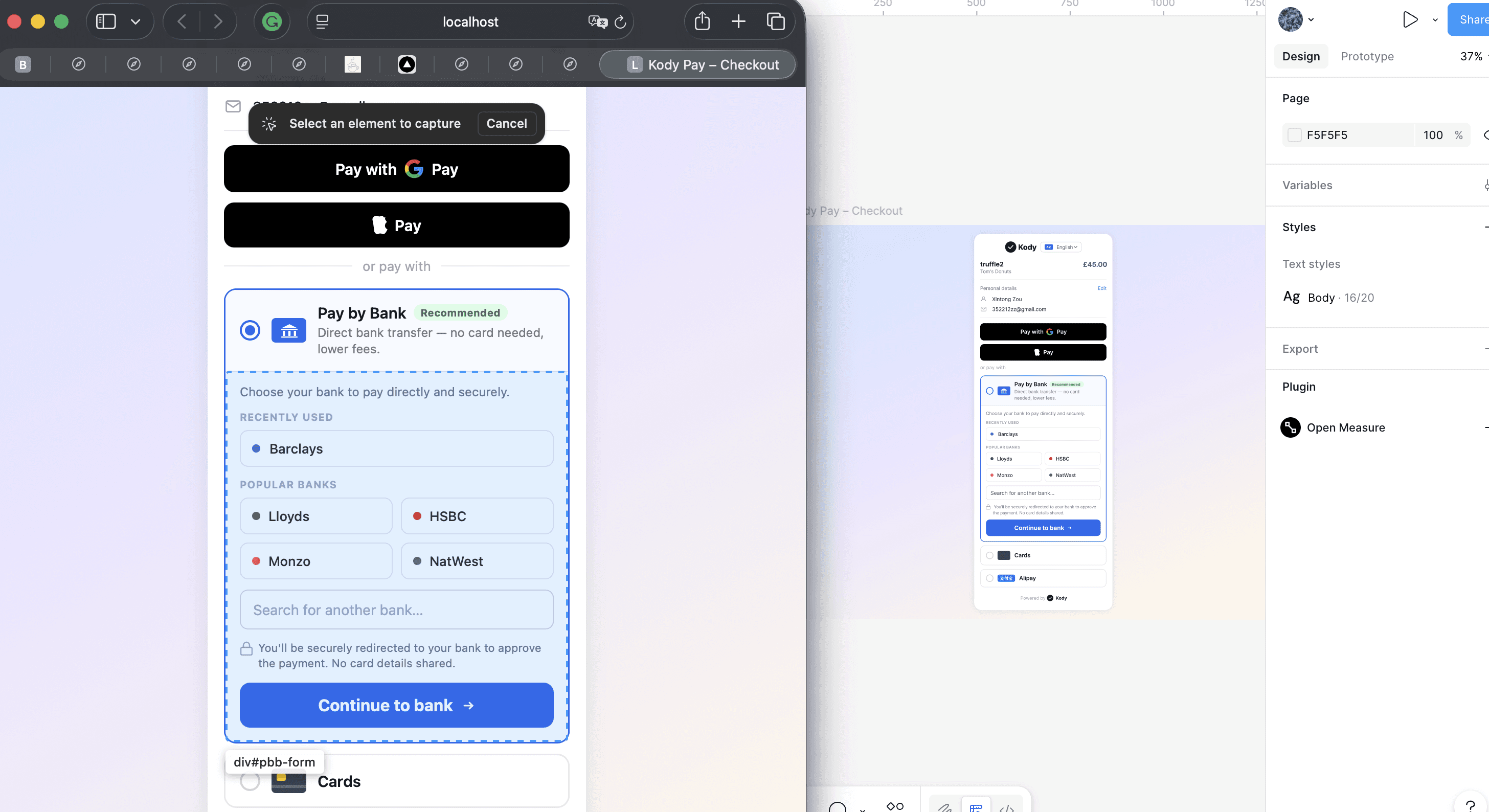
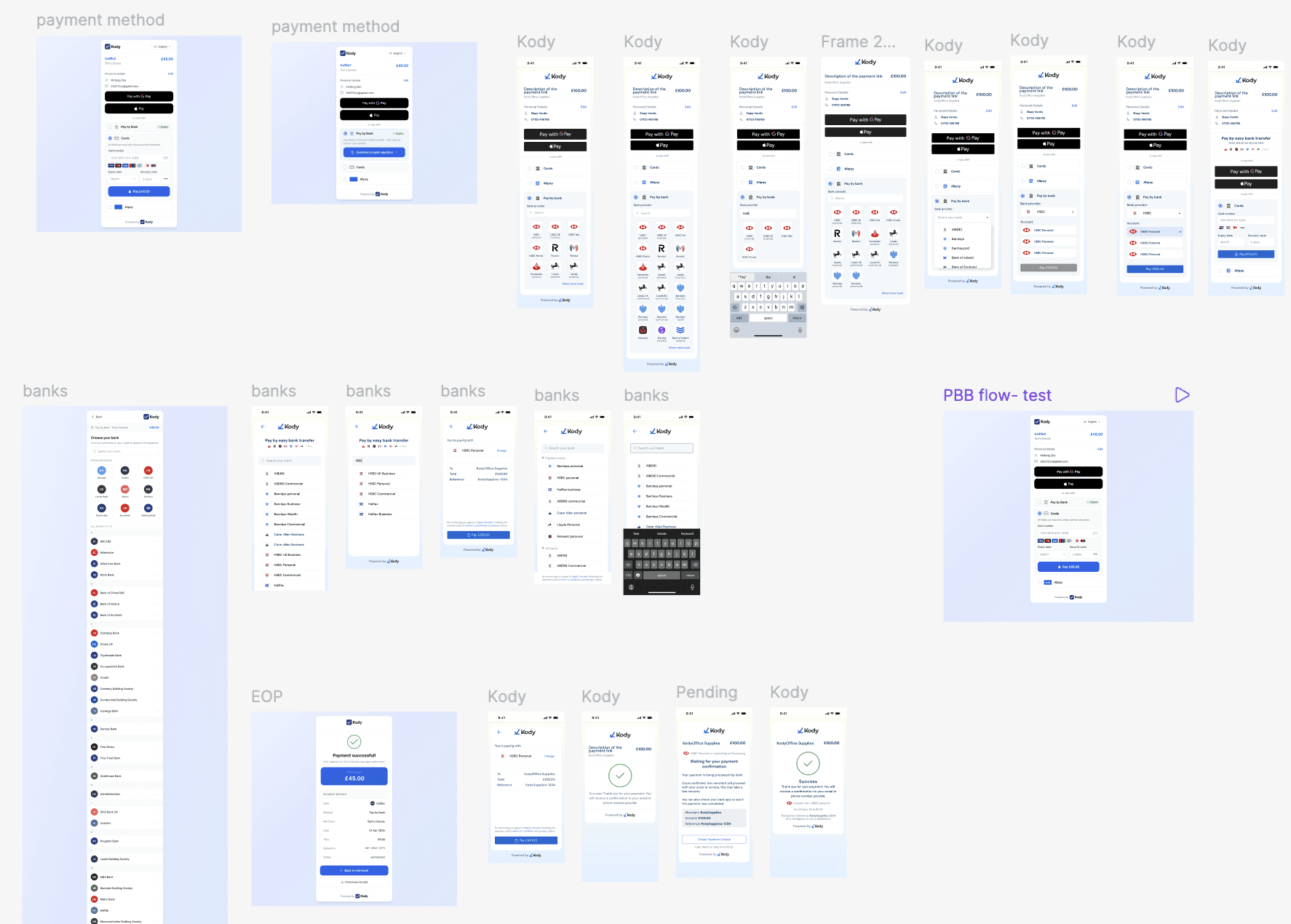
The web payment link design was missing from the design library, so I started from the existing Pay by Link checkout HTML to generate the correct design file. I used Claude Code to create initial PBB flows on top of the current UI system, then iterated in Figma on hierarchy, nudges, and bank selection patterns.

Rapid ideation sketch 1
Rapid ideation sketch 2

Final design

Here is the full shipped flow, from a merchant creating a link to both sides seeing the payment settle.

scroll to explore
kodyuniverse.com/payments/new
Merchant creates a payment link
Merchant creates a payment link for an amount above £40
Payer receives link
Payer opens checkout
Payer selects bank
Payer receives the link by email or SMS, opens it, chooses Pay by Bank, and selects their bank
Connect to bank app
Connect to the bank app
Payment confirmed
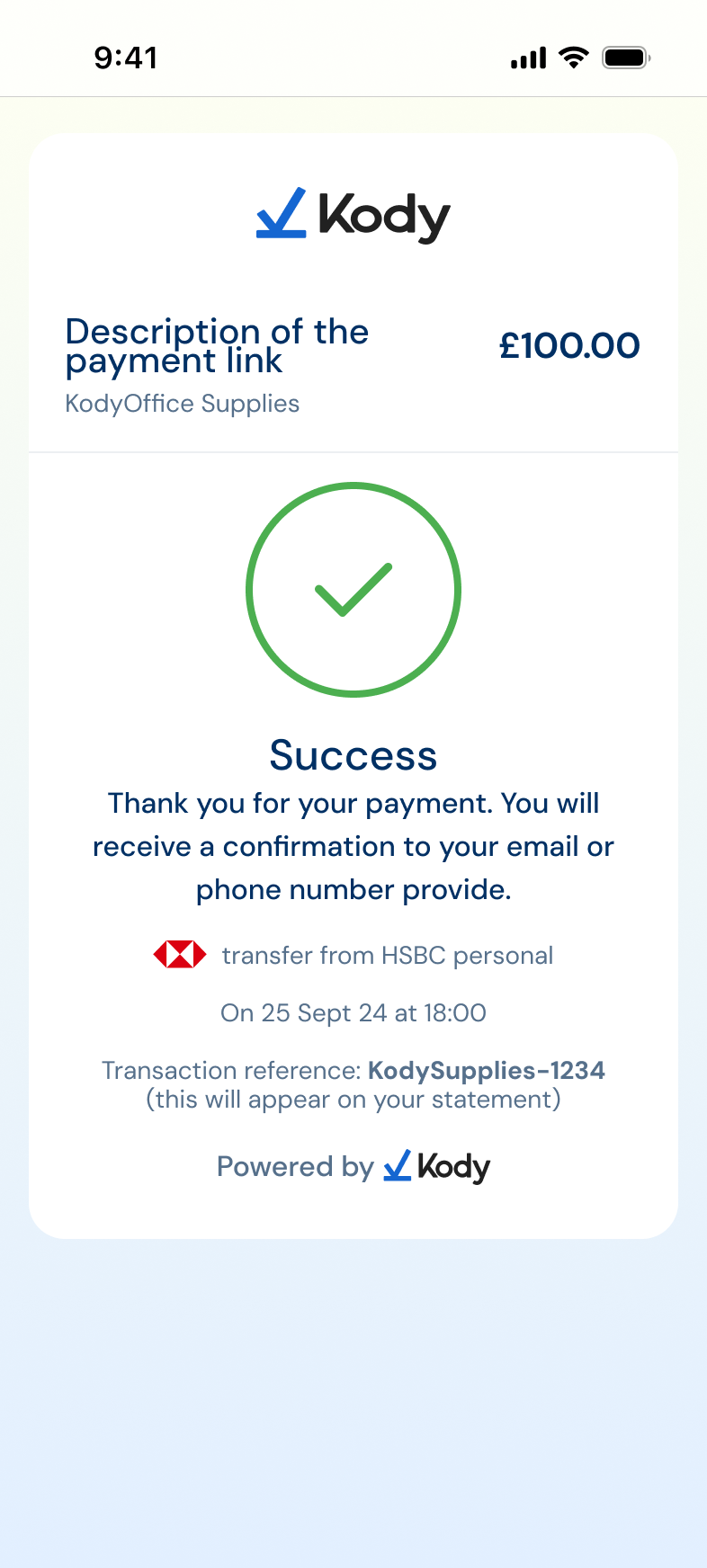
Payment completed — the payer sees confirmation
SMS receipt
mail.google.com
Email receipt
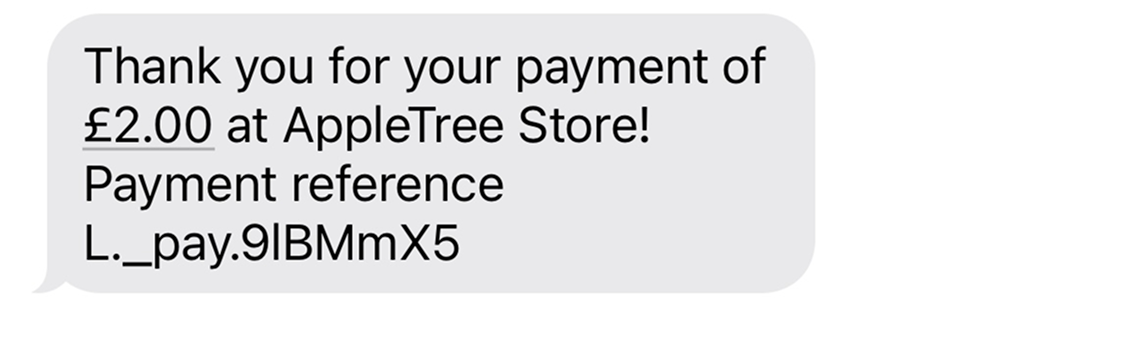
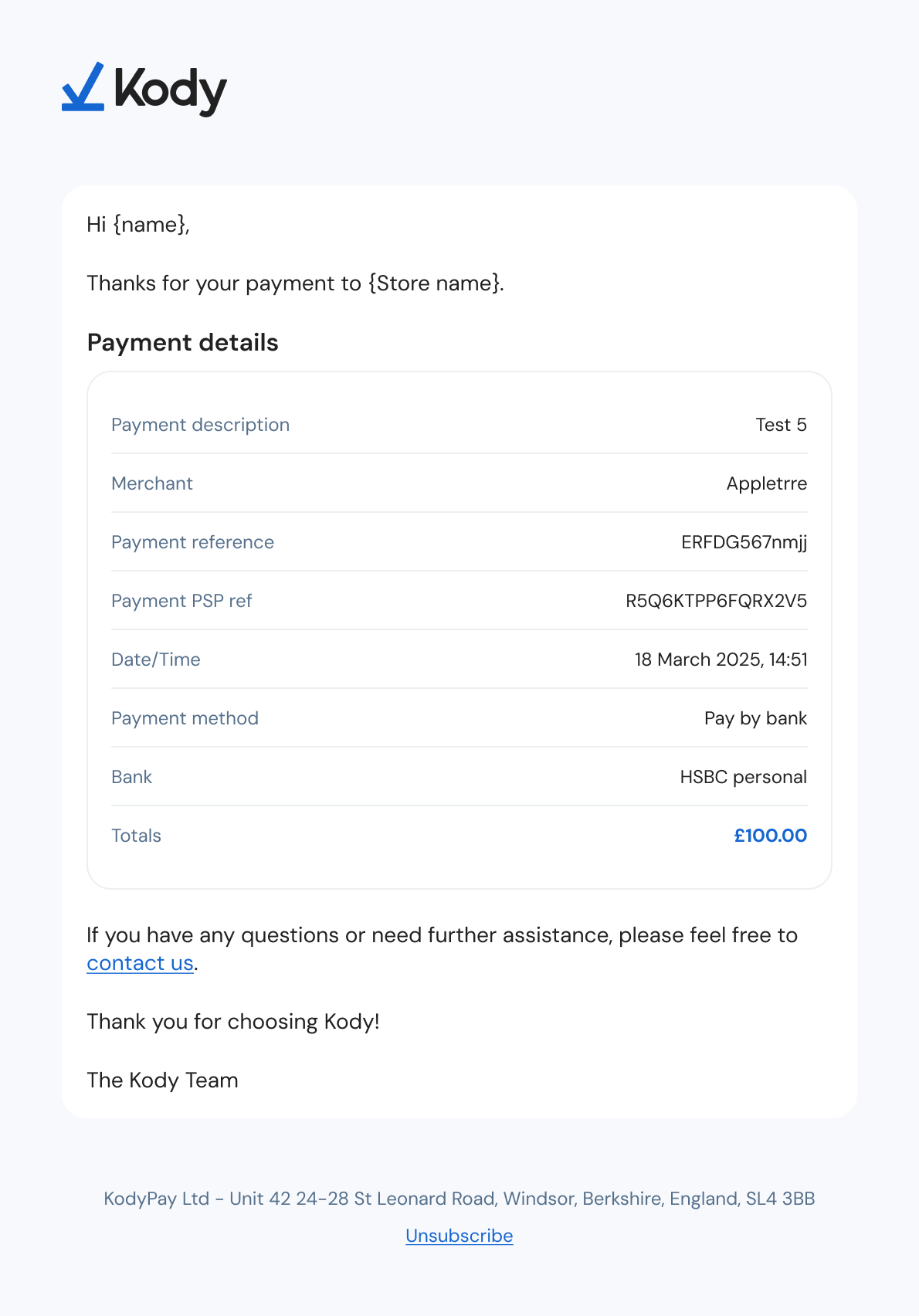
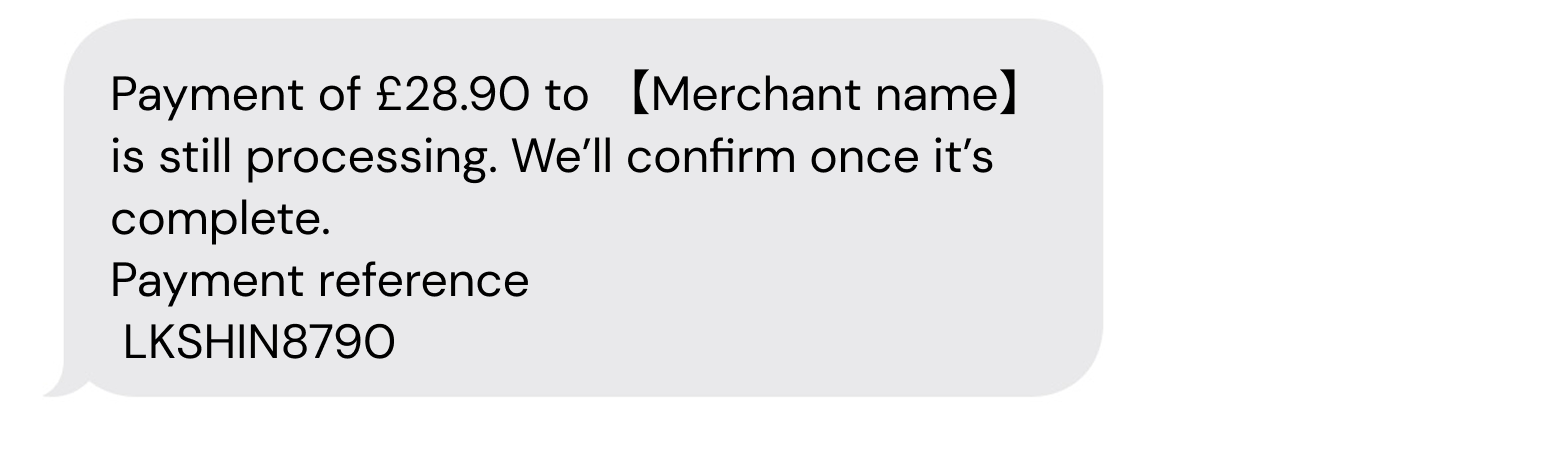
Payer also receives a digital receipt by SMS and email
kodyuniverse.com/payments/links/overview
Link details
kodyuniverse.com/sales
Kody Universe dashboard
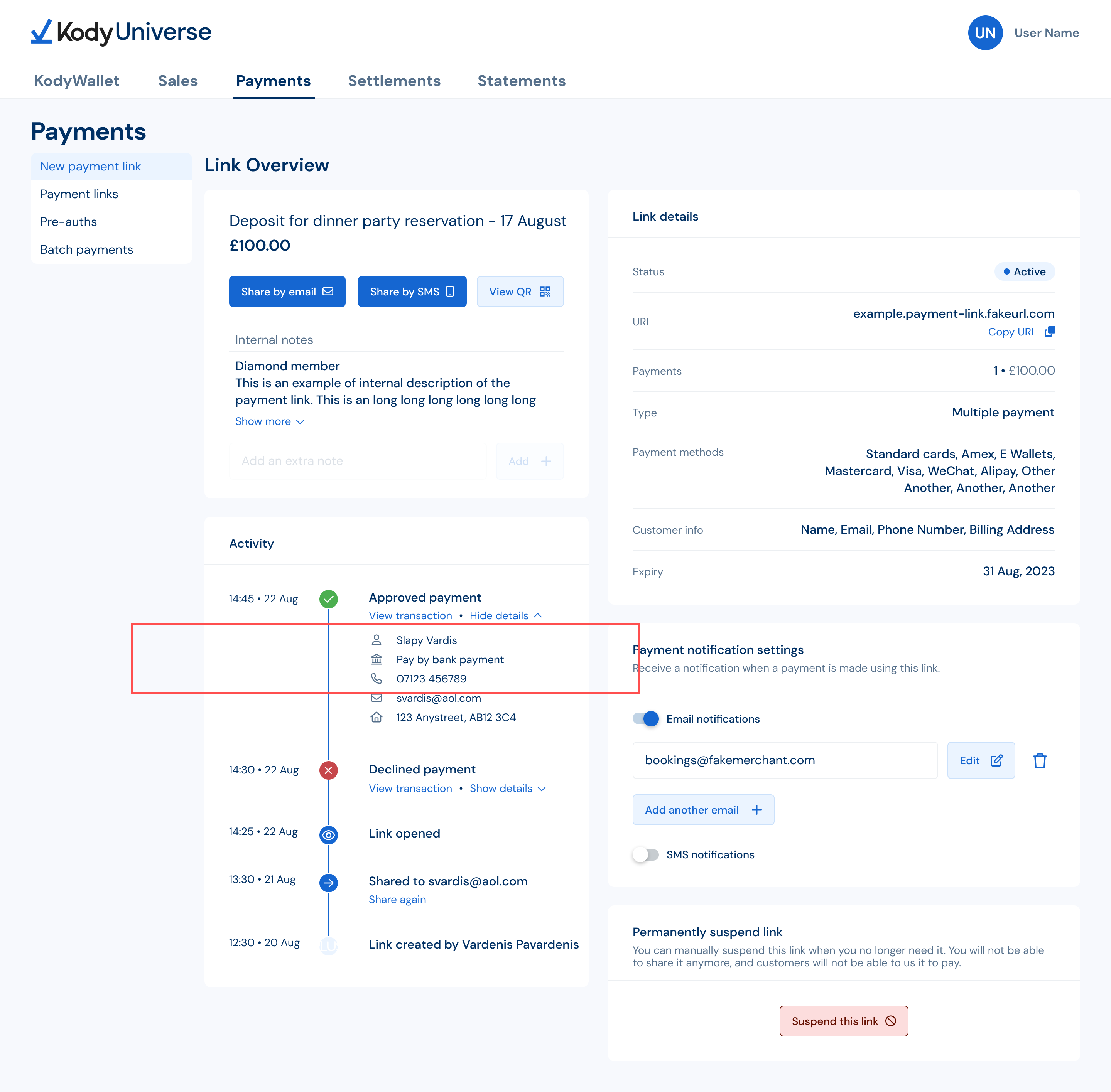
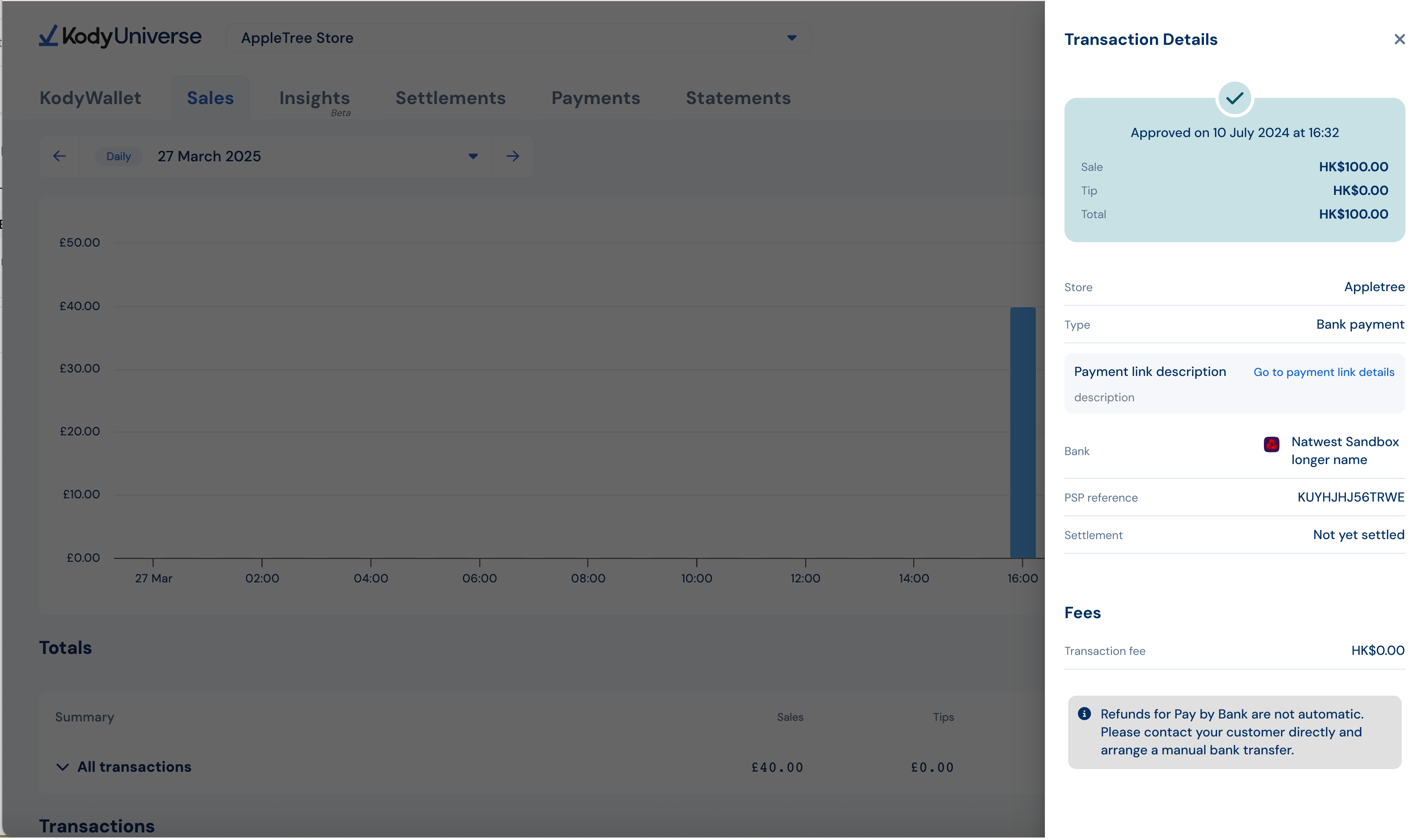
Merchant can track the payment link's status in Kody Universe

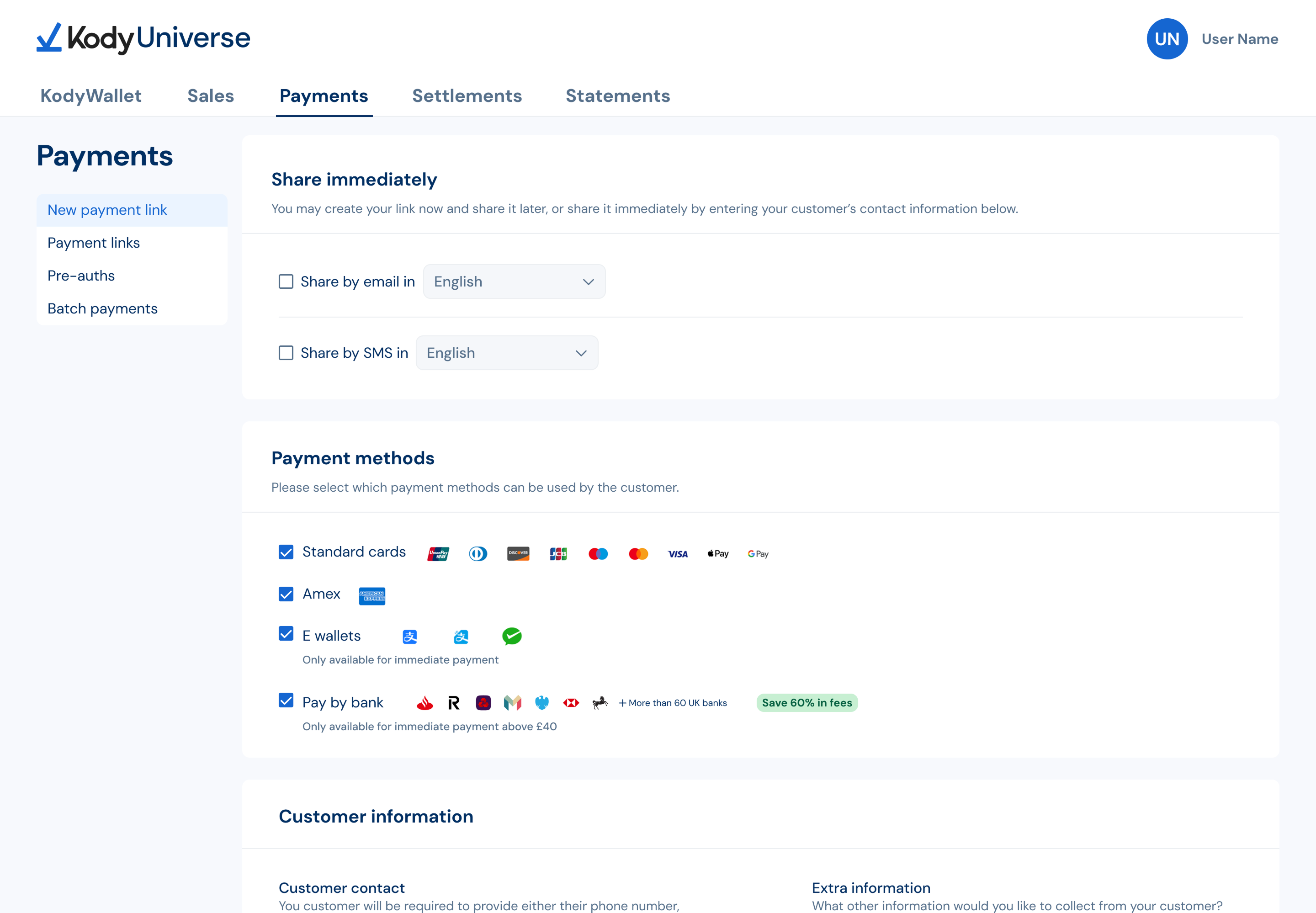
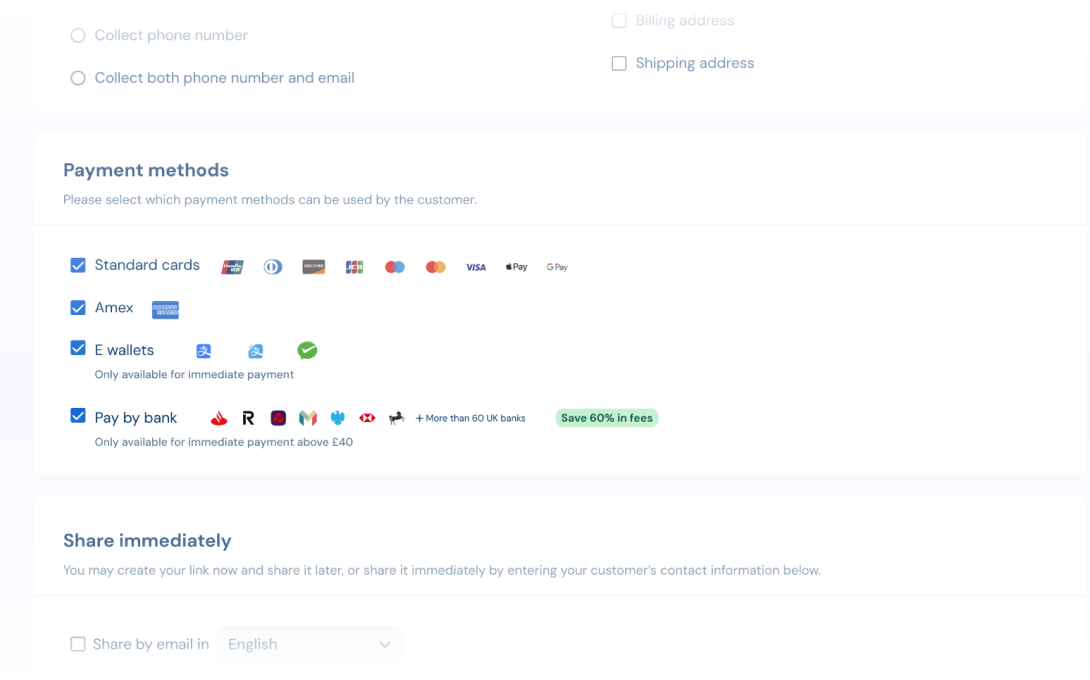
1. Select Pay by Bank by default and highlight fee saving for merchant understanding

Pay by Bank is selected as one of the payment methods by default, and the fee saving benefit is surfaced during payment link creation.

Copy & framing

“Save 60% in fees” — Highlight fee savings to drive Pay by Bank adoption

Interaction model

Auto-deselect Pay by Bank when eligibility requirements aren't met (e.g., payment below £40) — showing it deselected, with the reason, teaches them the rule

2. Launch message through Intercom and email to reach the right merchants

Intercom (inside Kody Universe) and email together targeted operation managers — the people who actually create links — rather than relying on business owners to pass information down. The two channels carry the same information in different shapes: Intercom leads with a visual hero for fast scanning; the email is structured for closer reading.

Intercom launch message
Launch email template

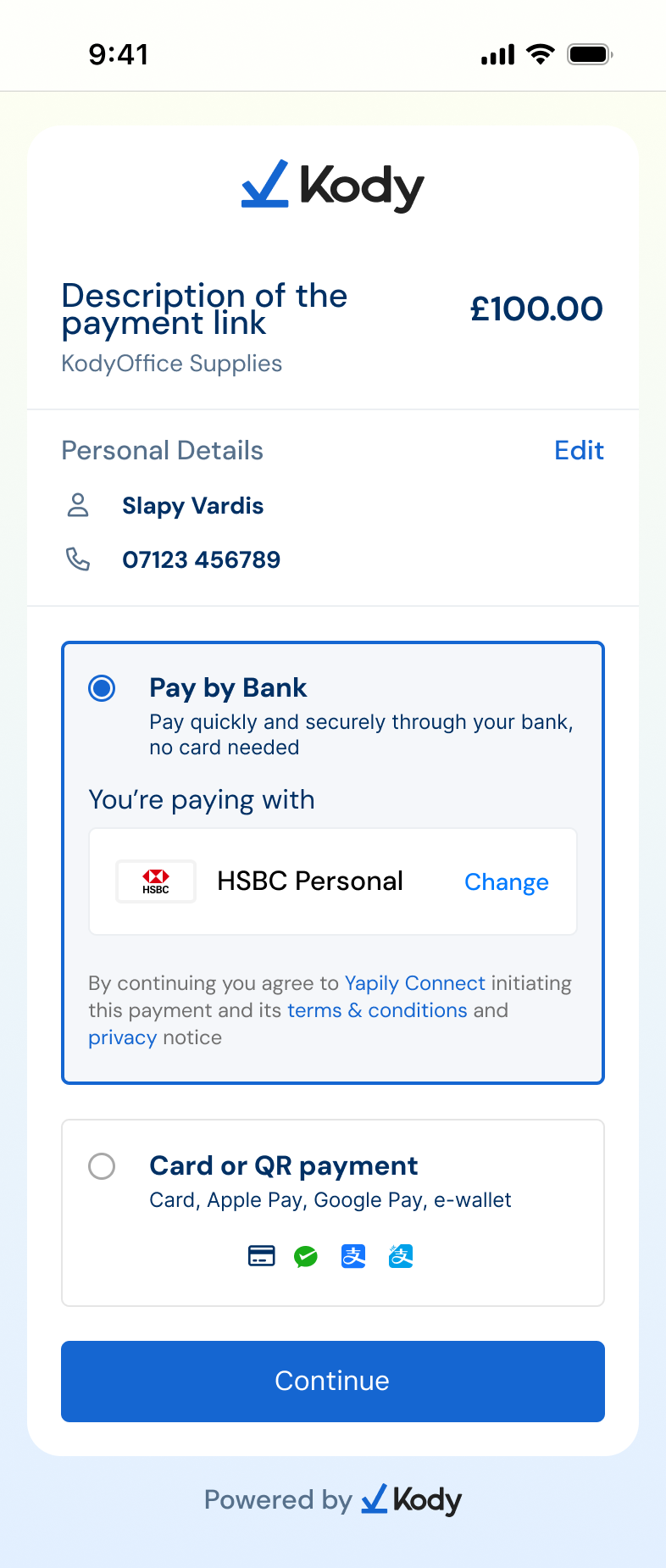
3. Remember the customer's previous bank

Returning customers can reuse their previous bank selection, reducing steps and making Pay by Bank feel faster on repeat payments.

First-time payer Pay by Bank selectionReturning payer previous bank pre-filled
Interaction model

First-time payer: Pay by Bank is pre-selected and visually led, with bank logos shown to build recognition

Interaction model

Returning payer: their previous bank is pre-filled to speed up Pay by Bank

4. Streamline flow to select banks and complete authorisation

The bank selection and Open Banking authorisation steps are consolidated into a single guided flow, reducing drop-off at the most unfamiliar part of the checkout.

Bank selection screen
Visual hierarchy

The 9 pinned banks at the top are personal variants, covering the majority of payers without changing the interaction model.

Visual hierarchy

The rest of the bank options are listed in alphabetical order.

5. Confirmation, status tracking, and refund handling

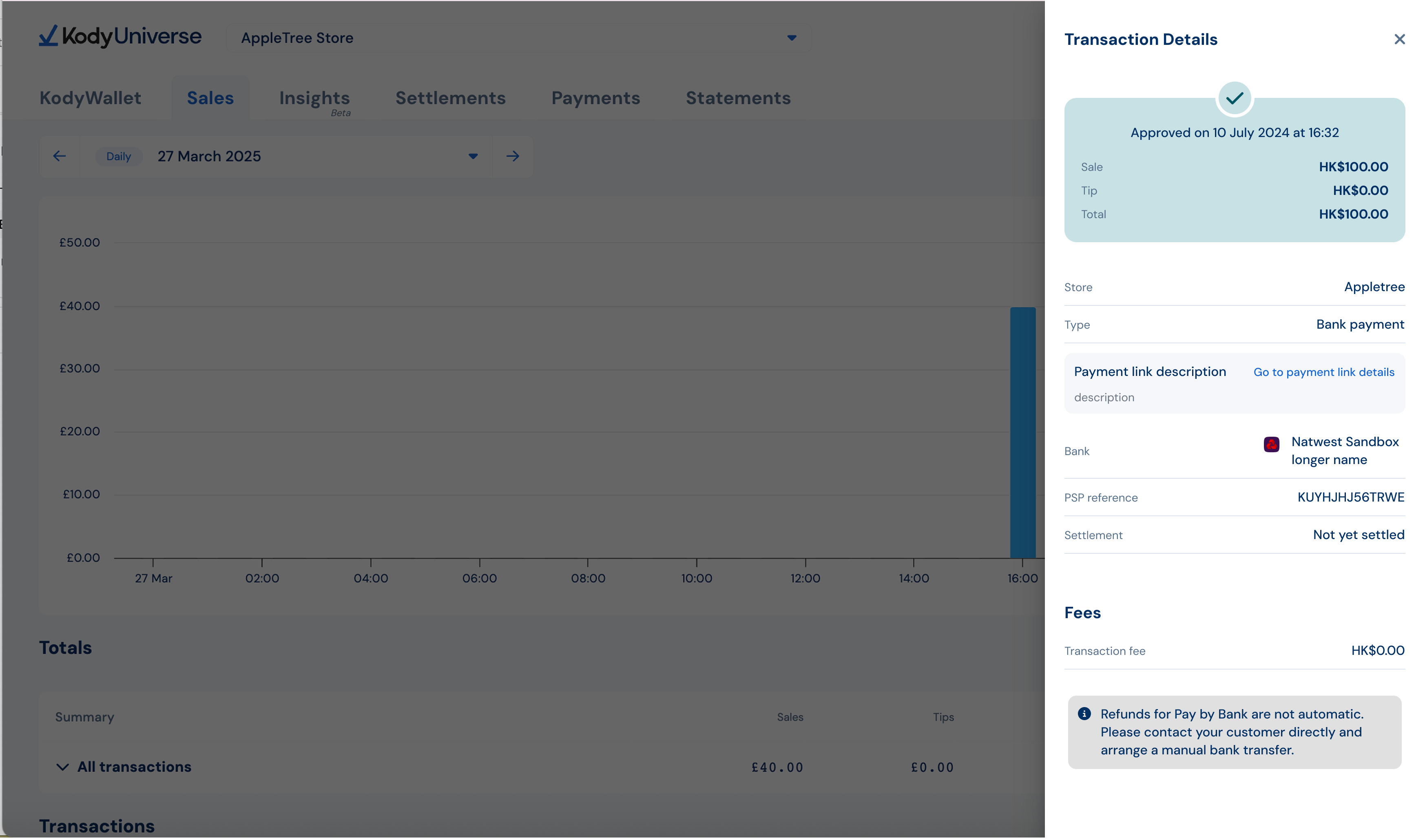
Refunds are not automatic for Pay by Bank. We added a clear explanation on the transaction details page so merchants understand the refund model and can guide customers through the correct next step.

For Merchant

For Customer

Text message

Email notification

Email result

Result

Within one month of shifting focus to Pay by Link

120%

relative uplift in Pay by Bank usage volume

69%

of all Pay by Bank transactions across Kody now come from Pay by Link

Results chart

What worked

  • Channel fit confirmed. Pay by Link drove a 120% uplift in Pay by Bank transaction volume within the first month. Pay by Link now accounts for 69% of all Pay by Bank transactions across Kody.
  • Fee saving reached the right people. 87% of Kody Universe users who received the launch message opened it — confirming the Intercom notification reached operation managers, not just business owners.
  • Usability held up under testing. 8 internal participants rated the flow 4.7/5 across web and mobile, completing both the merchant and payer flows without guidance.

💪 What can be improved

  • Desktop payer experience is incomplete. The flow was optimised for mobile — payers opening a link on desktop face an unguided mobile handoff for bank authentication.
  • Business account payers are under-served. Personal variants are pinned at the top, which helps most payers but increases wrong-pick risk for business account holders.
  • Payer-side experience data is missing. 120% uplift confirms selection — not satisfaction. Drop-off rate, repeat use, and support tickets would complete the picture.

Reflection

After completing the beta version, I looked back on the project and realised there are still several areas that need improvement.

01

Building the Trust Layer Behind Default Pre-selection

The primary goal of the beta was to validate whether Pay by Bank could drive transaction volume. To achieve this, we shifted the payment journey from terminal-based payments to Pay by Link and introduced Pay by Bank as the pre-selected payment method.

While this decision successfully increased adoption, it also amplified one of the key concerns associated with Open Banking payments: the lack of chargeback protection.

Although we do not yet have sufficient data to quantify the impact of this trust gap, it remains an important risk that should be addressed in a safe and transparent way.

Near-term

  • Make the "no automatic refund" limitation visible at the point of payment selection, rather than burying it within terms and conditions.
  • Clearly communicate refund expectations before payment is completed.

Medium-term

  • Allow payers who require a refund to contact the merchant directly through the payment link experience, rather than searching for contact details independently.
  • Introduce merchant verification signals during checkout to reassure users that the merchant is verified by Kody.

Long-term

  • Integrate direct refund capabilities as Open Banking refund APIs mature and become more widely supported.
  • Remove the limitation through product capability rather than relying solely on communication.

The pre-selection strategy was the right decision for a beta focused on proving adoption. Building trust is what will make the approach sustainable in the long term.

02

Strengthening the Merchant Fee-Saving Mindset

Several interventions in the beta contributed to Pay by Bank adoption, including the payment-link builder indicators, Intercom messages, and merchant email campaigns.

However, there is still uncertainty around whether merchants truly understand and internalise the value proposition of Pay by Bank as a cost-saving payment method.

To validate this assumption, I would conduct qualitative research to better understand merchant perceptions and identify whether cost savings are influencing payment method adoption decisions.

Near-term

  • Include transaction fee comparisons between payment methods in settlement reports.
  • Gradually surface cost-saving insights within the Kody Universe dashboard.

Long-term

The ultimate goal is not simply to communicate lower fees, but to establish a merchant mindset where Pay by Bank becomes the preferred payment method for eligible transactions.

Beyond improving awareness, expanding Pay by Bank into additional payment channels remains an important growth opportunity once the technical limitations of terminal-based Pay by Bank experiences are resolved.